
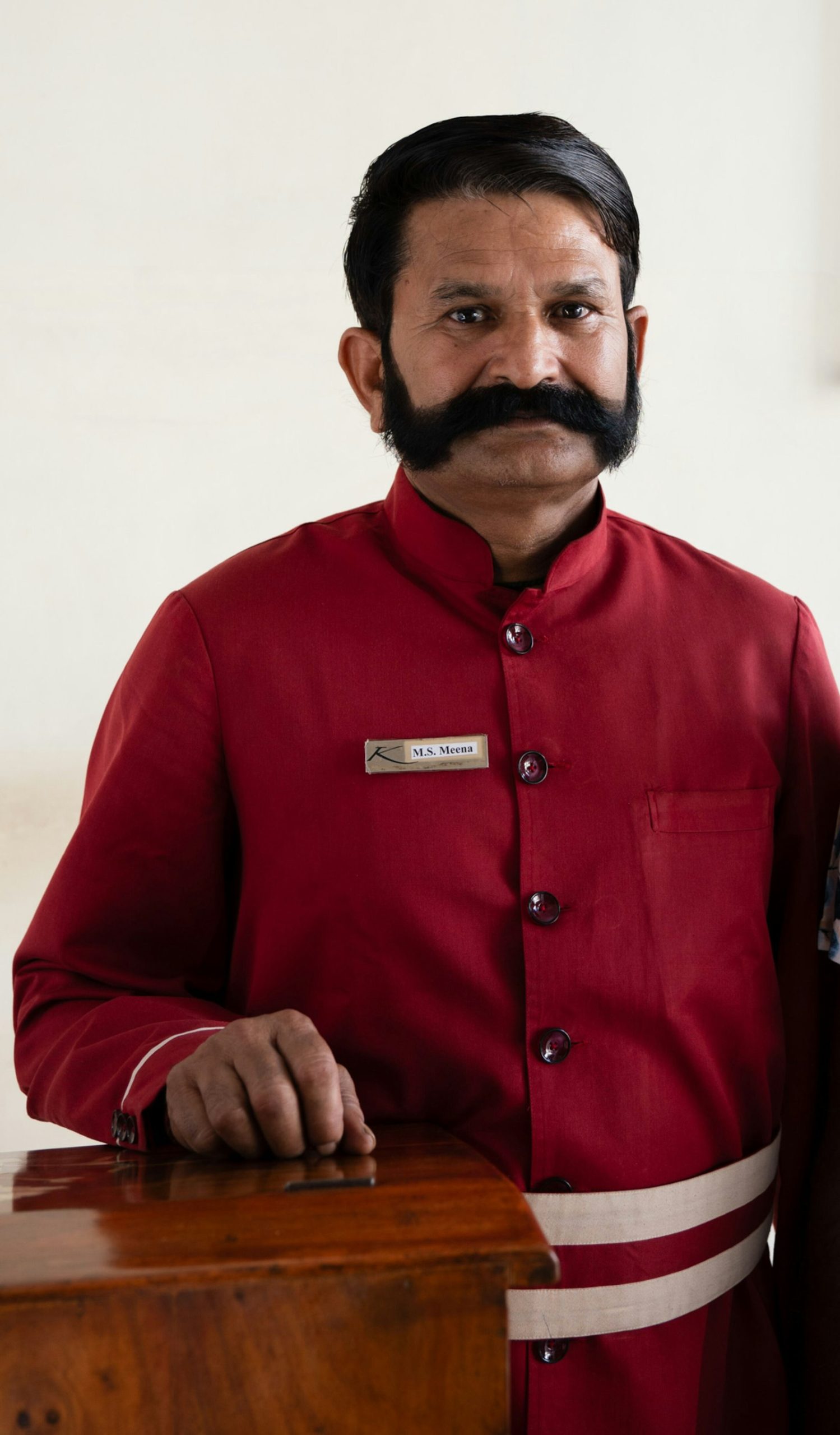
The staffing question never arrives as a question. It arrives as a month-end. The salaries go out, the owner looks at the month’s bookings beside the month’s payroll and wonders, usually in silence, whether five people are too many for eight rooms or whether the tired couple doing everything themselves are one illness away from disaster. Ask the trade for guidance and you get either a five-star manning chart with departments a small property will never have, or the shrug of “depends”.
This post is the missing middle. What the Indian industry actually runs at, from published data. Why those ratios would sink a small property if copied straight. How to count staffing in jobs rather than people, which is the trick that makes a small team work. Honest bands by property size, the hires that pay for themselves, the ones that quietly do not and the one number that tells you whether your payroll fits your property. As always, this is written for the owner of a homestay, guesthouse or small hotel, not for a chain with an HR department.
What this post covers
So, how many staff does a small hotel need?
The short answer: a small Indian property runs well at one-third to one-half of a person per room, provided each person does more than one job. A three-room homestay is a family plus one helper. A ten-room property is typically four to six people. Only when a dining room, banquets or round-the-clock desk enter the picture does the number climb towards the branded-hotel ratio of about 1.5 employees per room, a figure that belongs to properties selling services a small hotel does not sell.
Hold that summary against the number you currently pay and the rest of this post will feel either like relief or like a quiet alarm. Both are useful, because how many staff does a small hotel need is really a question about what the property can afford to promise.
The salary clock: the cost that never checks out
Before any ratio, understand what makes staffing the most serious line in your books. We saw in why hotels fail in India that properties die of fixed costs marching through empty months. Salaries are the largest and most human of those fixed costs. The EMI at least stays the same each year. Salaries rise, ask for advances, take festival leave in your peak week and, unlike the geyser, feel terrible to switch off.
Put it in room-nights, the currency this blog keeps returning to. Suppose your average sold night nets Rs 3,000 after the commissions and the breakfast. A helper at Rs 12,000 a month costs four sold nights. A cook at Rs 18,000 costs six. A five-person team at a modest Rs 70,000 a month costs twenty-three sold nights, every month, sold before the first rupee touches the EMI, the electricity or your own family. A ten-room weekend property selling 150 nights a month carries that easily. The same team on a property selling 70 nights in monsoon is eating a third of everything.
That is the salary clock. It does not mean hire nobody. It means every hire should be converted into room-nights out loud before the offer is made, because the salary will arrive in July with the same appetite it had in December.
What the industry ratios actually say
There is real data on Indian hotel staffing. The long-running Indian hotel industry survey tracked by CEIC puts the average at about 1.5 employees per room, a band that has held between 1.4 and 1.6 for nearly two decades. The spread inside it is the interesting part: five-star deluxe and heritage properties run around 2 employees per room, while two-star hotels run close to 1.1.
Read the spread and the logic reveals itself. Staffing follows services, not rooms. The five-star number pays for the banquet kitchens, the spa, the concierge desk, the engineering department, the three restaurants, the twenty-four-hour everything. The two-star number pays for reception, housekeeping and not much else. Nobody in that survey is running eight rooms with a garden and breakfast, which is why copying any of those ratios into a small property produces nonsense at both ends: 1.5 per room would give a ten-room homestay a fifteen-person payroll and an early funeral.
The honest use of the industry number is as a ceiling and a mirror. If organised hotels selling far more services than you have spent two decades pushing staff per room DOWN, driven by exactly the cost pressure you feel, then a small property has no business drifting upwards. Leaner is the direction the professionals are headed. You start with the advantage of already being small; the job is not to lose it.
Count jobs, not people
Here is the reframe that makes small-property staffing solvable. Stop asking how many staff does a small hotel need in people terms. List the jobs that must happen, then ask how few people can own all of them well.
The daily jobs of any small property are stubbornly constant: rooms cleaned and beds made; bathrooms spotless; laundry moving; breakfast cooked and served; the phone answered and bookings managed; check-ins and check-outs done warmly; the garden and common areas kept; small repairs attended before they become big ones; accounts written down; and someone responsible on the premises at night. That is ten jobs. It has never needed ten people.
The institution that holds most small Indian properties together is the multi-skilled pair: the caretaker-cook couple who live on site, one running the kitchen while the other runs the rooms, both covering the gate, the phone spillover and the night presence between them. Add a daily-wage cleaner who comes in the morning and a mali-cum-handyman shared informally with neighbouring properties and a six-to-eight-room place is fully covered by two salaries and change.
The failure mode is the opposite instinct: hiring by designation. A receptionist who only does reception at an eight-room property is idle for six hours a day, yet her presence lets the housekeeping hire say laundry is not his job. Specialists imported from hotel-industry thinking bring hotel-industry boundaries with them. In a small property every boundary you create is a gap you will personally fall into on a busy Saturday.
Two of the ten jobs deserve a special word because they are the ones nobody assigns. Night presence is a job even when nothing happens at night; a guest with a fever at 2 am or a gate rattling in the wind needs a known person on the premises, which is the quiet, unpriced value of live-in staff over commuting staff. And accounts is a job even at three rooms: ten minutes of honest writing every evening, owned by one named person, usually the owner. Properties rarely fail because nobody swept. They fail because for two years nobody counted, a lesson the failure post keeps teaching.
Honest staffing bands by property size
With jobs as the unit, the bands write themselves. Treat them as starting points against your own service promise, the way the occupancy bands worked: honest ranges, tuned by what your property actually offers.
Two to three rooms, the true homestay: the family is the staff. One part-time helper for cleaning and dishes, often shared with the household anyway. Hired staff beyond that usually signals rates too low to pay for help, not rooms too many to handle.
Four to eight rooms: the caretaker-cook spine, one morning cleaner, the shared handyman. Two full salaries, one part wage. The owner still owns the phone, the bookings and the guest relationships, which is not a burden; it is the moat. Guests book small properties to deal with people who own the answers.
Nine to fifteen rooms, breakfast included but no restaurant: four to six people. Two housekeeping, one or two in the kitchen, one front-of-house who also manages supplies and accounts, plus the owner. This is the size at which the owner’s phone starts drowning and the temptation of a “manager” appears. Resist it one size longer than feels comfortable. A manager layered onto a six-person team mostly manages the owner’s guilt.
Fifteen rooms upwards, or any size with a proper restaurant: the arithmetic changes honestly. A kitchen that serves lunch and dinner to walk-ins is a second business with its own staffing, its own suppliers and its own licence to lose money. Decide it as a second business, not as an amenity that wandered into the payroll. This is where properties drift towards 0.6 to 0.8 per room and, if banquets arrive, beyond.
One refinement cuts across all the bands: staff the week the way the week actually arrives. A weekend property needs its full strength Friday afternoon to Monday morning and far less on Tuesday. Daily-wage arrangements, staggered weekly offs taken midweek and the owner covering the quiet desk hours let the same headcount feel generous on Saturday without idling on Wednesday. The payroll should follow the same lumpy shape as the occupancy it serves, as far as human arrangements decently allow.
Across every band one rule holds: an accommodation-only property that finds itself near one employee per room is either running services it has not admitted to or carrying people a harder look would not justify.
Two ten-room properties, same town
Because the bands can feel abstract, walk through the comparison the way it actually happens on one hillside.
Property A staffs like a miniature hotel. A receptionist, two housekeepers, a cook, a helper, a gardener and a manager to supervise them: seven salaries, roughly Rs 1.2 lakh a month, before food and quarters. Property B staffs on jobs. A caretaker-cook couple, one morning cleaner, the shared handyman and an owner who runs bookings from her phone: barely half the payroll. Both properties sell the same 140 nights in a good month, because guests chose the hillside, the photos and the reviews, not the org chart.
Now run the two Julys. Property A’s monsoon sells 60 nights while seven salaries march on; the manager suggests discounts, the discounts drag the rate card and by September the property has taught its market to wait for deals, the spiral we mapped in the occupancy post. Property B’s July hurts too, but its smaller clock lets it hold rates and wait for October with its nerve intact.
The difference was never service. Guests at B are greeted by someone who owns the answers, fed by the same cook all year and sleep in rooms cleaned to one person’s standard. The difference is that A bought an organisation while B bought outcomes. At thirty rooms A’s structure becomes right; at ten it is a costume.
The hires that pay for themselves

Two hires earn back their salary so reliably that they deserve to be named.
The first is a genuinely good cook. Scroll any homestay’s reviews and count how many mention food against how many mention the furniture. The breakfast is the review. The Diwali dinner is the reason the family returns every year. A cook who makes guests plan their day around dinner is marketing, retention and the festive package rolled into one salary, which is why the difference between a Rs 15,000 cook and a Rs 20,000 cook is usually the cheapest Rs 5,000 in the trade.
The second is the housekeeper who owns cleanliness as a personal standard rather than a task list. Every diagnosis this blog has done keeps landing on the same floor: the spotless bathroom is the single most reviewed object in Indian hospitality. One person who cannot walk past a smudge is worth two who can.
And the anti-list, the hires that rarely return their salary at small scale: the uniformed receptionist standing at a desk eight guests a day will walk past; the marketing person hired before the website takes direct bookings; the manager hired to do what a clear notebook and a weekly hour of the owner’s attention would do; the second cook hired because the first one was never trained to prep ahead. Each of these is a real cost bought to soothe a feeling rather than to do a job the list above was missing.
The owner is staff too
One honesty the manning charts never include: in a small property the largest worker is usually unpaid. The owner-couple doing bookings, breakfast service, guest relations, accounts and half the emergencies are one or two full-time staff who never appear in the payroll, which flatters the ratio while hiding the real cost, exhaustion.
So the staffing question has a second face. Sometimes the arithmetic says a property does not need another hire while the household plainly does. A couple who have not left the property together in two years, a phone that never stops governing dinner, a season ended in illness: these are staffing deficits even when the salary nights look healthy. The hire that buys the owners one guaranteed day off a week and an evening without the phone is not a luxury; it is maintenance of the property’s actual engine, the same way January’s repainting is.
The test is symmetry. Count your own hours into the jobs list like anyone else’s. If the honest list shows the family carrying five jobs at festival pitch all year, the next salary is buying back the warmth that fills the review pages, which makes it one of the paying hires. Burnt-out hosts cannot deliver the one advantage small properties have.
The festive season: stretch, borrow or hire?
October to December, the season that pays for the year, doubles the work exactly when it doubles the revenue. The staffing answer is the same September decision as the rates: planned, not improvised.
Permanent hires for a ninety-day peak are the classic overcorrection; the season ends, the salary does not. The trade’s honest tools are shorter. Daily-wage help for housekeeping and dishes on the packed weekends, arranged in September with the same two or three reliable people each year so your peak is not their training period. The village network, the cook’s cousin and the cleaner’s sister, who arrive pre-vouched. Family drafted with defined jobs rather than hovering goodwill. And the owner’s own calendar cleared for the twelve heaviest days, because the festive fortnight is not the moment to also be repainting the gate.
One caution from the review pages: untrained temporary staff at your absolute peak is how a year of five-star ratings gets a “service was slow this Diwali” attached to it. Borrowed hands should carry trays and linen. The kitchen, the check-in warmth and anything a guest will remember stays with the trained core. The season tests the team you built all year; it is a bad time to audition strangers.
What guests actually notice

Since staffing exists to produce guest experience, it is worth being honest about what guests actually experience. They do not count your staff. No review in history says “adequate manpower”. Reviews say the bathroom was spotless, the food was homely, the owner helped plan the Dudhsagar trip, someone brought chai without being asked when the rain started. Warmth, cleanliness, food and responsiveness: four outcomes, all reachable by a small multi-skilled team that is paid fairly and not exhausted.
This is the small property’s structural advantage. The five-star buys consistency with headcount and process; you buy delight with proximity. The owner who carries bags and remembers names is not understaffing. She is delivering the one thing the chain hotel cannot hire at any ratio. The goal of the whole staffing exercise is to keep the team small enough that this warmth stays economically possible and rested enough that it stays emotionally possible.
There is a practical corollary for where to spend the payroll you do have: spend it on the moments guests remember. The first ten minutes after arrival decide the tone of the whole stay, so the best person on the property should be free at check-in time, not buried in laundry. The breakfast hour is the property’s daily performance, worth the cook’s full attention. The hour after a complaint is worth anyone’s full attention. Staff the memorable moments richly and the invisible ones leanly and a four-person team will out-review a seven-person team every season.
Where software quietly replaces a hire
One modern correction to the old manning charts: several of the ten daily jobs no longer need human hours at all.
The phone that must be answered at 9 pm with a rate was, for decades, a staffing requirement; it is why lodges kept a man at a desk all night. A booking page on your own website answers it now, quoting the printed tier for the right date at midnight without overtime. Confirmations, advance payment collection, the reminder before arrival, the WhatsApp message after checkout asking for the review and the photos: all of this is the front-desk job of 2010 running unattended in 2026. Booking software, ours included, is best understood in staffing terms: it is the employee who works every midnight, never takes Diwali off and costs less than a month of anyone’s salary in a year.
What software does not replace is the human half of the same job. It frees the owner’s hours from typing confirmations so those hours can go where the reviews are written: the welcome, the dinner conversation, the trip advice. Automate the clerical, keep the personal. A small property that gets this division right runs with one fewer salary than its neighbour and better reviews at the same time.
Keeping good people: the arithmetic of staying
The cheapest staff strategy in this industry is keeping the good people you already trained, because every departure is paid for twice: the weeks of retraining and the standards that wobble in between, usually reviewed by a guest in the middle of it.
The retention levers of a small property are humble and mostly cheap. Fair pay that does not insult the market rate. Decent living quarters, since the caretaker couple’s room is their entire quality of life. The festival bonus given happily rather than extracted. Food from the same kitchen the guests eat from. Respect in front of guests, which costs nothing and is remembered for years. And a small annual rise decided by you before it must be asked for. Against these, the cost of churning through cheaper replacements every eight months is a false economy that shows up in the one place you cannot afford it, the consistency of the guest experience.
There is also a scale honesty here: a team of three cannot absorb one bad hire the way a team of thirty can. At small scale, character beats CV every single time. Hire slowly, from references your own people vouch for, then hold on.
The long version of holding on is growing your own senior person. The cleaner who has watched check-ins for three years can be taught the booking screen in a week; the cook’s standards can be extended to supplies and stock. When the day comes that the property genuinely needs someone to run it in your absence, the trusted insider promoted with a real raise beats the outside manager on every axis that matters at small scale: loyalty, guest familiarity and the fact that the rest of the team already follows her. Training up is slower than hiring in. It is also how a small property gets a manager who does not cost like one.
Track one number: salary nights
As with occupancy, one home-made number keeps the whole subject honest. Each month, divide your total staff cost, salaries plus food plus the annualised bonus, by your average net rate per sold night. The result is your salary nights: how many of the month’s sold nights worked only to pay the team.
Watch it move through the year in the same notebook as the three occupancy numbers. In season it should feel small, a fifth or less of the nights you sold. In monsoon it will swell; that is expected, the season’s earnings were budgeted to carry it. What the number catches is drift: a hire added in a flush October that turns quietly unaffordable by July, or a payroll that grew while the rate card stood still, which is really a decision to pay the team out of your own margin. Salary nights rising year on year with no new service to show for it is the earliest, gentlest warning the books can give.
The one-line summary
If this post must fit in one line: how many staff a small hotel needs is a question about jobs, not headcount. The honest Indian answer is one-third to one-half of a multi-skilled person per room, family included, rising only when real new services like a restaurant genuinely arrive.
The industry will keep publishing its ratios. Let it. Your property does not compete on manpower; it competes on a warm welcome, a clean bathroom and a breakfast someone actually cooked with attention. Build the smallest team that delivers those four things without exhaustion, pay it well enough to stay and put the salary you did not spend into the rate card’s confidence instead. That is staffing done the small-property way: fewer people, better kept, doing work guests actually remember.
Straight questions, straight answers
How many staff does a small hotel need in India?
Roughly one-third to one-half of a person per room for an accommodation-with-breakfast property, with every person handling more than one job. A three-room homestay runs on the family plus a part-time helper. A ten-room property typically needs four to six people including the owner. The count rises honestly only when new services arrive, a full restaurant above all.
What is the staff-to-room ratio in Indian hotels?
The long-running Indian hotel industry survey tracked by CEIC puts the average at about 1.5 employees per room, steady between 1.4 and 1.6 for two decades. Five-star deluxe and heritage properties run near 2 per room while two-star hotels run near 1.1. Those ratios pay for restaurants, banquets and round-the-clock departments, so they are ceilings, not templates, for a small property.
Can a homestay run without hired staff?
A two-to-three room homestay can and very often does, with the family handling hosting and a part-time helper for cleaning. The honest limits are energy and absence: one illness, wedding or emergency should not close the property. Most families add the first hired helper for resilience rather than workload, which is a good reason.
Should a small hotel hire a manager?
Usually one size later than it feels. Up to about fifteen rooms, a manager layered onto a small team mostly duplicates the owner armed with a clear notebook and a weekly review hour. The genuine trigger is absence: an owner who cannot be reached most days needs one trusted senior person, grown from the existing team where possible, rather than an outside designation.
How should a small hotel staff for the festive season?
Decide in September, alongside the rates. Use the same two or three daily-wage helpers every year for housekeeping and dishes on peak weekends so the rush is never their training period, draft family with defined jobs and keep the kitchen and check-in with the trained core. Permanent hires for a ninety-day peak become a twelve-month salary; borrowed and daily-wage hands are the trade’s honest tool.
What does a hotel employee really cost beyond salary?
Count food, living quarters where provided, the festival bonus, the annual rise and the statutory contributions that apply as your team grows. A useful habit is converting the full monthly cost into room-nights at your net rate: a Rs 15,000 helper at a Rs 3,000 net rate costs five sold nights a month. Priced this way, every hire can be weighed honestly against the work it adds.
Image credits: Staff portrait by Prince Lewis on Unsplash, kitchen photo by fuseviews on Unsplash and chai photo by Harsh Kondekar on Unsplash, all under the free Unsplash License.
OpenStays provides booking software for homestays, hotels and resorts, but this blog is not about software. It is about running a property well, written for owners, with owners.
How many people run your property and which hire changed things the most? Tell us in the comments below. The best stories will find their way into future posts, with your permission and full credit.

Leave a Reply