
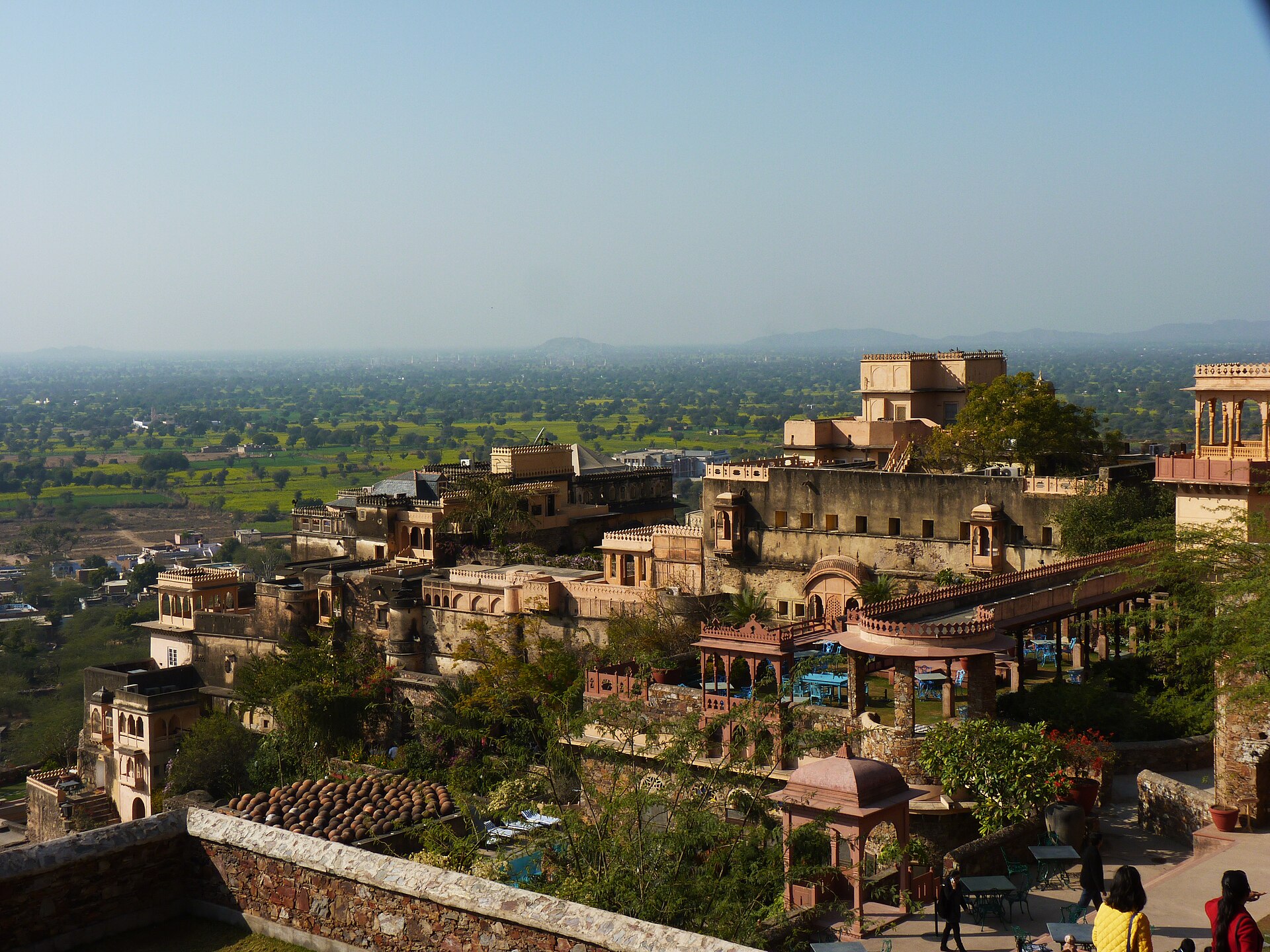
Every town with tourists has one: the lodge that opened with marigold garlands and a priest three seasons ago and now stands with its shutter half down and a “TO-LET” board where the name used to be. Everyone in the market has a theory about what went wrong. The owner, if you ever meet him, has a longer one.
YouTube is full of these stories now, “I put my savings into a resort and lost everything”, filmed in empty dining halls across Himachal, Goa and Coorg. The videos get lakhs of views because every viewer is either dreaming of opening a property or quietly afraid about the one they already run.

So let us answer the question honestly: why do hotels fail in India? Rarely because the rooms were bad. The reasons are mostly decided long before the first guest arrives: a lease signed against a fantasy season, fixed costs that refuse to shrink with size, staff maths nobody did on paper, demand borrowed from platforms instead of owned and a cash flow that dies quietly every off-season. None of this is bad luck. Almost all of it is visible in advance, which is exactly why it is worth reading about before it is your board on the gate.
One promise before we begin: this is not a frightening post. It is a map of the potholes, written so you can drive around them. The same list, read in reverse, is a survival checklist and we will end there.
On this page
- The lease decides the ending on day one
- The construction that never ends
- Small scale carries big-hotel costs
- The staffing maths nobody does before opening
- Why homestays survive where small hotels sink
- Borrowed demand is not a business
- A calendar full of promises
- The unclaimed Google page
- Underpricing out of fear
- The tariff illusion: revenue is not what reaches your pocket
- Location myths and the bypass road
- The off-season kills, not the peak
- The side-business trap
- The early warning signs, eighteen months out
- What the survivors do differently
- Straight questions, straight answers
- Why do hotels fail in India?
- Is the hotel business risky in India?
- Do leased hotels fail more often than owned ones?
- Are homestays more profitable than small hotels in India?
- Can a failing hotel recover?
- What should someone check before buying or leasing a hotel in India?
- The board on the gate
The lease decides the ending on day one
Watch enough failed-property stories and a pattern appears before any guest ever checks in: the lease.
Most first-time hoteliers do not buy property; they lease it, a bungalow near a waterfall, a floor of a commercial building, a half-built resort someone else abandoned. And the lease amount gets negotiated in the most dangerous month possible: the month of dreaming. The landlord quotes against Diwali-week occupancy; the new operator calculates against a calendar where every weekend is a long weekend. Both sides sign a number that only the best four months of the year can pay.
Then the year actually happens. The lease is due on the 5th of every month, in monsoon, in exam season, in the weeks after New Year when the phones go silent. A property doing genuinely decent business, half full across the year, can still hand its entire season’s surplus to the landlord and stand at zero in March. Add the escalation clause that raises the lease 10% every year regardless of how the town’s tourism is doing and the operator is running faster every season just to stay in the same place.
The rough arithmetic every operator should do before signing and most do at closing time instead: the annual lease should be comfortably covered by the realistic off-season months alone, because those are the only months that are guaranteed to come. If the lease needs the festive quarter to survive, the festive quarter is already spent before it arrives. One bad season, a landslide year, a highway closure, one flood headline on the news and the game is over. The rooms did not fail. The rent did.
The construction that never ends
The lease’s twin brother in the failure stories is the build. Watch the YouTube confessions carefully and a second pattern repeats: the property that opened late, over budget and already in debt.
Hotel construction in India has a private law of physics: it takes half again as long and costs half again as much as the plan. The borewell hits rock. The road needs widening before the material lorries can climb. The contractor disappears for Onam. Meanwhile, if the money is borrowed and it usually is, the EMIs start ticking long before the first guest pays and the lease, if the land is leased, runs from the day of signing, not the day of opening.
So many properties open six months late, owing eighteen months of costs, needing their very first season to be a record one just to reach zero. First seasons are never record ones; new properties have no reviews, no repeat guests and no name.
The operators who survive the build share one habit: they open small and ugly-on-purpose, six finished rooms earning while the next six are completed from revenue, not from fresh debt. Pride wants a grand opening with every room ready. Survival wants paying guests subsidising the plaster. The failed properties almost always chose pride.
Small scale carries big-hotel costs
Here is the structural truth that almost nobody explains to a first-time owner: in this business, the paperwork does not know how small you are.
An 8-room property and a 40-room property need largely the same file of licences, trade licence from the municipality, police verifications, fire safety, FSSAI registration the moment the kitchen serves guests, GST compliance once bookings cross thresholds or come via platforms, tourism department registration, lift and generator certifications where they apply and the annual renewals of all of the above, each with its own office, queue and fee. The 40-room hotel spreads that cost and effort across 40 rooms. The 8-room property carries almost the same burden on one-fifth of the revenue.
The same maths applies to the accountant, the annual filings, the property insurance, the borewell and genset maintenance, the plumber’s retainer. These are step costs, they arrive in fixed lumps, not in proportion to your room count. Which is why “small and cosy”, beautiful as hospitality, is structurally expensive as business. Per room, the smallest properties pay the highest overheads in the industry, before a single salary is counted.
The staffing maths nobody does before opening
Now the largest line item and the one with the most self-deception in it: staff.
Run a small hotel entirely on hired staff and count the true minimum. The front desk alone is a shift job: morning, evening and someone answering the phone at night. Housekeeping. A cook, because guests eat. Security or a caretaker for the gate. That is four to six salaries on the best-designed small rota, before attrition even enters the picture.
Then comes the detail every operator learns painfully: staff need offs, fall sick and go home for festivals. Which means you do not need four people; you need four people plus the backup arrangement for each, precisely on the days the property is fullest, because Diwali is exactly when your best cook wants a week in his village and no one can blame him.
Add salaries, food, staff quarters, the churn of retraining someone new every few months and the manager you eventually hire because you cannot be there every day and a brutal fact emerges: a 10-room hotel run entirely on external staff carries nearly the same skeleton crew as a 30-room one. The 30-room hotel divides that crew’s cost by thirty. Below a certain size, fully-staffed simply does not add up, the salaries eat the margin in the good months and the whole property in the lean ones. Many small hotels that “failed due to low occupancy” actually failed because their staffing model needed a bigger hotel to pay for it.
Why homestays survive where small hotels sink
This is also why the homestay model keeps quietly outliving the small hotel next door and it is worth saying plainly: the homestay’s advantage is not charm. It is labour economics.

At a family-run homestay, the front desk is amma, the kitchen is the family kitchen cooking a few extra plates, the night phone is answered from the bedroom and the “backup staff” problem barely exists, because the family is its own backup. The roles flex around school runs and festivals without a rota. What a small hotel pays out monthly in five salaries plus quarters plus churn, the homestay absorbs as family effort, hard effort, no doubt, but effort that stays in the family instead of leaving as fixed cost. On identical tariffs and identical occupancy, the homestay banks what the small hotel pays out.
There is a second advantage stacked on top: the family at the centre is also the product, guests remember the people and the people generate the reviews, the word of mouth and the repeat visits that hired staff rarely do. The honest caveat belongs here too: family labour has real limits, burnout is real, children grow up and leave for cities and a homestay that grows beyond what the family can carry inherits the small hotel’s staffing maths overnight. But as a structure for surviving the lean years, family-run beats salary-run at small scale, almost every time.
Borrowed demand is not a business
Ask a struggling property where its guests come from and the answer is usually one word: the apps.
We wrote a full post on the disadvantages of OTA dependence, so here is only the failure-shaped part: a property whose entire demand arrives from platforms owns no demand at all. It rents demand, at 15–25% plus GST, at rankings that can change with one algorithm update, at guest relationships that stay inside the app. In the good years this looks like a working business. Then commissions rise, or visibility drops, or a new property nearby discounts harder and the owner discovers there is no guest list, no repeat-family tradition, no direct channel, nothing underneath the platform bookings but hope.
Failed properties almost always show this signature in the last year: rising commission percentages, falling margins and a desperate final round of discounting inside the same apps that were consuming the margin. The demand was never theirs. When it left, there was nothing to hold.
A calendar full of promises
The failure the neighbours never see: the property that looked busy and died anyway.
We argued the case fully in should hotels take advance payment, so briefly: a register full of telephonic “pakka confirm” bookings is not revenue, it is intention. No-shows on the biggest weekends, rooms held for promises while paying guests were turned away, the defensive overbooking that follows and injures real guests, a property can be “full” all season in the diary and empty in the bank. Weak properties do not just lose this revenue; they build their staffing and provisioning on it, spending real money against imaginary bookings. That gap, real costs against promised income, is one of the quietest killers on this list.
The unclaimed Google page
Some failures are simply invisibility. The property is decent, the food is good and the Google listing, the page where every booking decision now begins, sits unclaimed at 3.9 stars from forty unanswered reviews, with photos some guest uploaded in 2021. The families scrolling the map never call and the owner never learns why the phone is quiet. He concludes “season is weak this year”. The season was fine. The shortlist happened without him.
Underpricing out of fear
Failing properties almost never price too high. They price too low and lower every season.
It starts as strategy: be a little cheaper than the neighbour, fill rooms, build a name. But at small scale the arithmetic is unforgiving. Every occupied room carries a real cost, linen, gas, electricity, wear, staff time. A tariff set below true cost-per-occupied-night means every “successful” busy weekend digs the hole deeper.
And price wars in a small market have no winner: the neighbour cuts, you cut, the town’s tariffs settle at a level where nobody can repaint a wall and the guests learn to wait for further discounts. Meanwhile the property that invested in its Google page and its repeat families charges ₹800 more for a similar room and stays full, because it competes on trust, not price. Underpricing feels safe and humble. It is actually the fastest treadmill to the exit.
The tariff illusion: revenue is not what reaches your pocket
Between underpricing and the off-season sits a quieter arithmetic mistake: counting revenue as if it were income.
Walk through one occupied room-night honestly. The tariff says ₹3,000. If the booking came through a platform, the commission with taxes takes ₹600 off the top. The room consumed laundry and linen wear, a geyser’s worth of electricity, toiletries, breakfast ingredients, gas and a share of the staff hours that cleaned and served it, at most small properties, another ₹500–800 in true cost, more in winter. What actually reached the business from that ₹3,000 night was perhaps ₹1,600 and out of that must come the lease, the salaries, the licence renewals, the EMI, the repairs and the family’s own living.
Owners who count the ₹3,000 feel busy and prosperous right up until the March bank statement disagrees. Owners who count the ₹1,600 make different decisions all year, about which bookings are worth taking, which discounts are actually losses dressed as marketing and what the tariff must be for the property to repaint its own walls. When people ask why do hotels fail in India while appearing full, this gap, between the revenue everyone sees and the contribution nobody calculates, is very often the answer.
Location myths and the bypass road
“Location, location, location” gets repeated so confidently that it deserves its own honest audit, because location faith has sunk plenty of properties.
A premium paid for “the best location in town” is only worth what the town’s demand calendar can repay. Single-attraction towns are the classic trap: one waterfall, one temple, one viewpoint, which means one season, sometimes just eight strong weekends a year, being shared by every property that crowded in after the town trended on Instagram. The location was genuinely good; the demand was simply eight weekends deep and the lease was priced as if it were fifty-two.
And location is not even permanent. Ask the owners on any old highway what the new bypass did to their business, the road moved, the traffic vanished and the “prime highway location” premium they had paid became a monument. Trekking routes change, a landslide reroutes tourist taxis, a new airport lifts one valley and quietly empties another. The survivors treat location as a current advantage to be renewed, by building a name guests will detour for, never as a permanent asset the property can sleep on.
The off-season kills, not the peak
Here is the line every surviving owner will nod at: no hotel in India shuts in December. They shut in August.
The business is seasonal; the costs are not. Lease, salaries, electricity minimums, loan EMIs, compliance renewals, the monthly outflow arrives in the monsoon exactly as it does in Diwali week. A property can complete a genuinely profitable year on paper and still die, because profit is an annual story and cash is a monthly one. The festive quarter’s earnings, spent confidently by February, on renovation, on the family wedding, on the second property, leave nothing to feed the lean months and by September the owner is borrowing to pay salaries against a season that is still six weeks away. Do that twice and the borrowing becomes the business.
The survivors treat the peak season’s money as the off-season’s oxygen: a cash reserve, sized to carry every fixed cost through the property’s worst historical stretch, kept boringly untouched. It is the least glamorous habit in this entire post and the one that most reliably separates the properties that are still open after ten years.
The side-business trap
Two more failure patterns, both human rather than financial.
The first is the property as a side business. Bought with city earnings, visited on weekends, run day-to-day by a manager on a modest salary with no stake in the outcome. Hospitality is a presence business, we have said it across this blog and a property whose owner appears twice a month gets exactly twice-a-month standards. The staff know it, the guests feel it, the reviews record it, slowly. Nobody decides to fail; the property just drifts, at manager speed, until the numbers force a decision.
The second is the family dispute. Properties are family assets and family assets attract family disagreements, brothers who inherit together and cannot agree on reinvestment, partition disputes that freeze all spending while the roof leaks, the second generation that wants to sell while the first wants to serve. More good properties in the hills have been lost to the family WhatsApp group than to any market force. If the ownership question is unsettled, settle it before the season, no business survives two steering wheels.
The early warning signs, eighteen months out

Failure announces itself, for those willing to hear. Owners who have been through it describe the same five signals, usually visible a year and a half before the shutter comes down.
The discounts deepen every season while occupancy stays flat, the market is telling you price is not the problem. Staff churn accelerates, because staff always know the property’s health before the accountant does. The lease or an EMI gets paid late “just this once”, there is no such thing as once. The Google rating drifts down a decimal a season with no owner replies, which means guests are voting and nobody is listening. And the owner’s own visits get shorter and further apart, because the property has quietly become a source of dread instead of pride.
None of these five is fatal alone. Two together deserve a serious sit-down with the numbers. Three or more and the honest choices are a genuine turnaround, new pricing, staffing rightsized, direct demand built, or a dignified exit while the property still has value. The worst outcome is the default one: two more years of borrowing and hoping, which converts a bad situation into a lost one. Properties rarely die of their problems; they die of the delay in facing them.
What the survivors do differently
Read the list backwards and the survival checklist writes itself.
The properties still standing after ten years signed leases the off-season alone could pay, or own their land outright. They opened at the size their money finished, not the size their dream started. They matched their staffing model to their scale, family-run where family was willing, honestly counted salaries where it was not and sometimes chose to stay smaller because the maths said so.
They built their own demand patiently: a claimed and answered Google page, a guest register with real numbers in it, advances that turned promises into bookings, one warm message to past guests before each season and a direct booking channel whose payments land in their own bank account the same day. They counted contribution, not revenue and priced at what the experience is worth rather than what fear suggested. And they hoarded peak-season cash like the monsoon was coming, because it always is.
So when a worried owner asks us why do hotels fail in India, usually meaning “will mine?”, the truthful reply is that the failures and the survivors mostly started with the same buildings, the same towns and the same seasons. What differed was a handful of unglamorous decisions, every one of which is still available to whoever is asking.
Not one item on that list needs a big investment. Every item needs the thing failed properties never gave: steady, boring, weekly attention. That is the honest difference. Hotels in India rarely fail in a dramatic moment; they fail on a hundred quiet Tuesdays when nobody was watching the lease maths, the register, the reviews, or the reserve. Watch those four and you will most likely never be the story the town tells.
Straight questions, straight answers
Why do hotels fail in India?
The recurring reasons: leases priced against peak-season fantasy that off-season revenue cannot carry; fixed compliance and staffing costs that do not shrink with property size; total dependence on platform bookings with no direct demand of their own; no-advance booking cultures that fill calendars with promises instead of revenue; neglected Google pages that quietly remove them from guests’ shortlists; fear-driven underpricing; and cash-flow collapse in the off-season despite profitable peak months. Most of these are visible and avoidable, before they become fatal.
Is the hotel business risky in India?
It is a seasonal business with year-round fixed costs, which makes it riskier than its busy weekends suggest. The risk concentrates in specific choices: an aggressive lease, a fully-salaried staffing model at small scale, platform-only demand and no off-season cash reserve. Properties that get those four right, or run family-first like a homestay, carry far less risk than the averages imply.
Do leased hotels fail more often than owned ones?
Lease-heavy operations are over-represented in failures, because the lease is a fixed monthly cost that arrives in the emptiest months too, usually with annual escalation on top. A useful test before signing: can the realistic off-season months alone cover the annual lease? If the deal only works with a full festive quarter, one bad season can end it. Owned properties survive bad years by tightening; leased ones must pay the landlord first.
Are homestays more profitable than small hotels in India?
At small scale, often yes, not because of tariffs, but because of labour structure. A family-run homestay absorbs as family effort what a small hotel pays out as five or six salaries plus backup arrangements, quarters and churn. Compliance burdens are also typically lighter for registered homestays in many states. The advantage fades if the property grows beyond what the family can carry, at that point it inherits small-hotel staffing maths.
Can a failing hotel recover?
Frequently, yes, if the diagnosis is honest and early. Renegotiating or exiting a bad lease, rightsizing staff to the property’s true scale, claiming and working the Google page, starting an advance-payment policy and rebuilding a direct guest list have each pulled real properties back. What rarely recovers is a property that responds to decline with deeper discounts on the same platforms, that treats the symptom with the disease.
What should someone check before buying or leasing a hotel in India?
The unglamorous file, not the view: the lease terms against realistic off-season revenue; the true staffing cost including backups and churn; the licence and compliance list with renewal dates; the property’s Google page and review history; how much of its demand is platform-dependent; and the seasonality of the town measured across bad years, not brochure years. The view sells the dream. The file tells you whether the dream pays its rent in August.
The board on the gate
Go back to that shuttered lodge from the first paragraph. By now you can probably reconstruct its story without meeting the owner: a lease signed in the dreaming month, five salaries on eight rooms, bookings that lived on an app, promises in the register, a Google page nobody claimed and an off-season that finally could not be borrowed through. Any two of those, survivable. All six together and the marigold garlands never had a chance.
The encouraging part and it is genuinely encouraging, is that every one of those six is a decision, not a fate. Properties fail on autopilot; they survive on attention. If you run one today, pick the weakest of the six and give it one evening this week. That is how the story changes.
OpenStays provides booking software for homestays, hotels and resorts, but this blog is not about software. It is about running a property well, written for owners, with owners.
Have you watched a property in your town close, or pulled one back from the edge? Tell us in the comments below. The best stories will find their way into future posts, with your permission and full credit.
Image credits: Neemrana Fort by Archit Ratan (CC BY 2.0), Traditional Keralite Meal by Sreekumar Panicker Kodiyath (CC BY-SA 4.0) and Bawali Rajbari by Rangan Datta Wiki (CC BY-SA 4.0).

Leave a Reply