
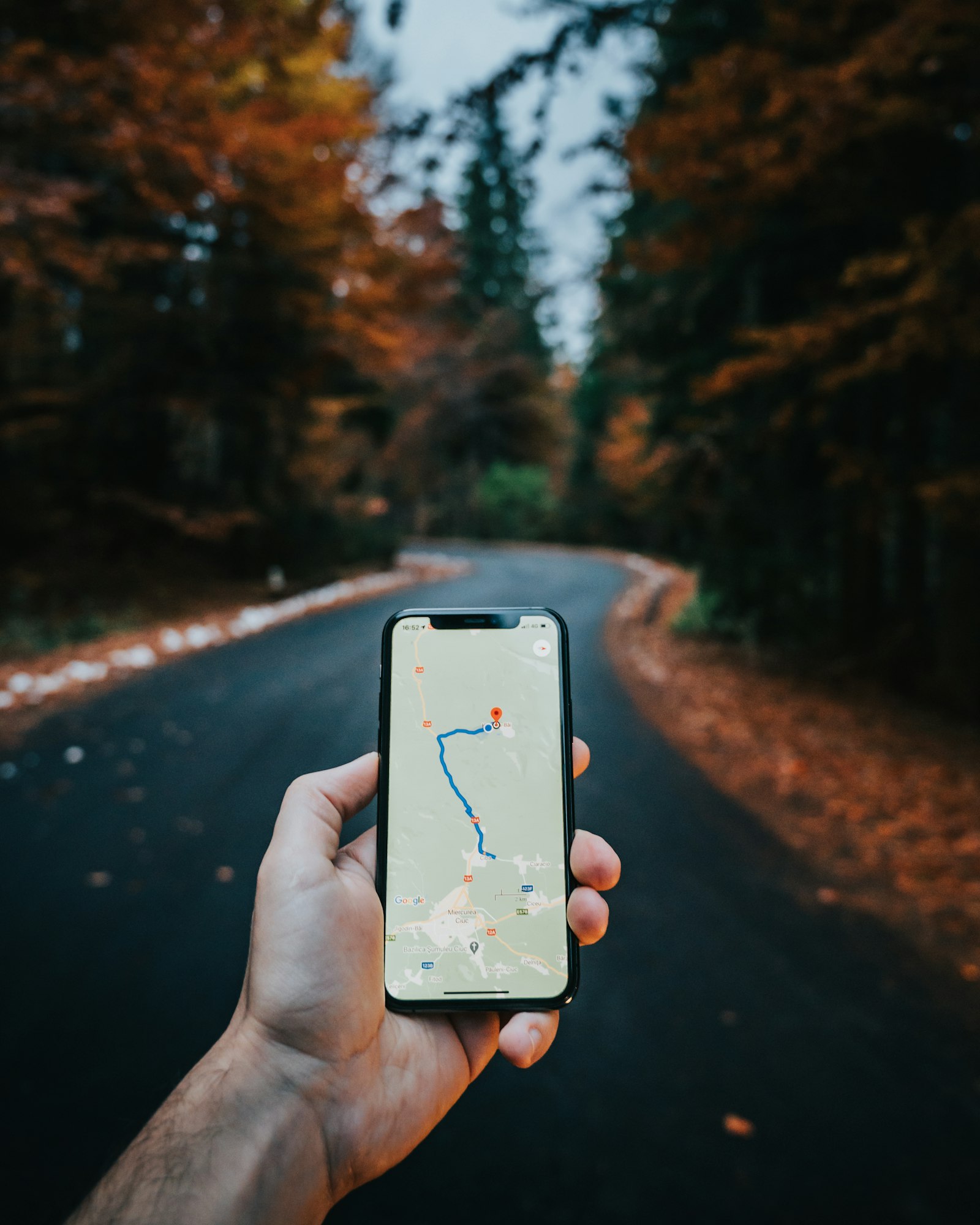
Watch a family plan a weekend trip. Before any booking app opens, before any call is made, someone types the destination into Google, opens the map and starts reading. Within ten minutes, half the properties in town are out of the running and not one of those owners will ever know they were considered and dropped.

That is the quiet power of the rating and the reviews sitting next to your property’s name on Google. So let us answer the question directly: do Google reviews matter for hotels? Yes and in India, more than almost anywhere else. Because here, the booking decision does not begin on a booking app or a hotel website. It begins on Google Search and Google Maps, where your stars are visible before anything else about you is.
This post is about what those reviews actually decide, the shortlist, the tariff, the walk-in’s confidence and about the parts nobody discusses honestly: the unfair review, the silent happy guest and why your reply to a review matters more than the review itself.
On this page
- Where the booking decision actually begins
- The shortlist cut nobody sees
- What the stars quietly decide: your tariff
- The unfair review, honestly
- Replies matter more than ratings
- The silent happy guest
- Your reviews are also talking to you
- A tale of two properties
- Even the walk-in checks first
- What reviews cannot do
- So, does the rating deserve your attention?
- Straight questions, straight answers
- Do Google reviews matter for hotels in India?
- What is a good Google rating for a hotel?
- Do Google reviews affect hotel bookings directly?
- Should hotels reply to negative reviews?
- Do more Google reviews improve a hotel’s ranking on Maps?
- Is it worth paying for Google reviews?
- The ten-minute habit
Where the booking decision actually begins
We said it in our post on the disadvantages of OTAs and it bears repeating: Google starts the journey. The guest searches “resorts near Chikkamagaluru” or “hotels in Bhimtal” and Google answers with a map and a list, name, photo, distance, price range and a rating out of five.
Note what has happened before you were aware of anything: your property has already been presented, already been compared and already been judged, on a page you did not design, in a contest you did not know was running. The apps come later, for price comparison. The website comes later, if at all. The first impression belongs to Google and on that page, the rating is doing most of the talking.
This is truer in India than in most markets. UPI-era travellers live inside Google Maps, for directions, for petrol pumps, for restaurants, so checking a stay’s rating there is not a research step; it is a reflex. The family in the car outside two similar hotels will pick the 4.4 over the 3.9 without being able to tell you why.
The stage for all of this is your Google Business Profile, the free listing Google builds around every property, whether the owner has claimed it or not. That last part deserves a pause: unclaimed, the page still exists, still collects reviews, still shows a rating, it simply does so without you. A surprising number of properties are being judged daily on a page nobody at the property has ever opened.
The shortlist cut nobody sees

Reviews do their most important work invisibly, at the shortlist stage. Travellers rarely read reviews to choose a property; they read ratings to eliminate properties. Below 4.0, most guests quietly drop a stay from consideration unless price forces them back. Between 4.0 and 4.3, you survive the cut. Above 4.5 with a healthy count of reviews, you become the default choice that the rest of the shortlist is compared against.
The cruelty of this filter is that it sends no notification. The guest who skipped you never called, never enquired, never told you why. Owners see the bookings that came and assume the rating is doing fine; they cannot see the fifty families a month who scrolled past. A ₹200 price advantage cannot fix this, because the guest never got far enough to see your price as a factor.
There is a second, less discussed number: the review count. A 4.6 from 12 reviews reads as a family’s WhatsApp group being helpful. A 4.3 from 400 reviews reads as the verdict of a town. Age and volume give a rating its weight, which is precisely why the properties that started collecting reviews five years ago now enjoy a lead that money cannot quickly buy.
What the stars quietly decide: your tariff
Here is the part that should interest every owner more than pride: the rating decides not just how many guests come, but what they will pay.
A guest paying ₹4,500 a night for an unfamiliar property is buying certainty as much as a room. A 4.5 rating with recent, specific reviews is that certainty and guests demonstrably stretch their budget for it. Meanwhile the 3.8-rated property down the road, possibly with better rooms, ends up competing on discounts because discounting is the only argument left when trust is absent. Weak reviews slowly push a property into the price-war end of the market; strong reviews quietly lift it out of it.
This applies across the range. The wedding party block-booking a resort checks the rating before the site visit. The corporate travel desk shortlisting guest houses has a rating cut-off in its policy. Even the taxi driver at the railway station, asked to suggest “some good hotel, bhaiya”, checks Google now.
The unfair review, honestly
Every property that operates long enough collects a few reviews that are simply not fair. The guest who wanted a swimming pool at a homestay price. The one-star because rain spoiled the sightseeing. The revenge review after a refused late checkout. It stings, it feels personal and one bad night of reading them has made many owners conclude the whole system is rigged.
Two honest consolations. First, guests read patterns, not outliers. Thirty warm reviews followed by one furious rant does not read as “bad property”, it reads as “difficult guest” and most readers silently side with you. Second, the unfair review is your best stage. A calm, dignified owner’s reply, acknowledging, correcting the record without arguing, wishing the guest well, is read by hundreds of future guests long after the reviewer has forgotten the episode. Owners who understand this stop dreading unfair reviews; the reply turns each one into a small advertisement for how the property treats people even when provoked.
What never works: arguing, personal remarks, or the tragic paragraph-long counter-attack. Future guests are not reading to judge the guest. They are reading to learn who you are.
Replies matter more than ratings
This is the most under-used lever in the whole reviews game, so it deserves its own section. The reply to a review is not written for the reviewer. It is written for every future guest who reads it.
A property that replies to every review, briefly, warmly, in its own voice, signals something no star count can: there is a real person here, paying attention. “Thank you, Meena ji. The mango season starts in April, come back for it” tells a future guest more about a stay than three photos. Silence tells its own story too. So does the copy-pasted “Dear valued guest, thank you for your feedback”, a template reply reads exactly like what it is and guests who choose properties for the people notice it.
The habit costs ten minutes a week at most properties. Of everything an owner can do about reviews, this is the highest return on the least effort and it is fully in your control, today, without asking a single guest for anything.
The silent happy guest
Now the imbalance every owner should understand: unhappy guests review by default; happy guests review only when moved or asked. Left to itself, this arithmetic slowly drags every honest property’s rating below what it deserves.
Which means most Indian properties do not have a review problem, they have an under-collection problem. The rooms are good, the food is loved, the guests leave smiling and none of it reaches Google, while the one guest angry about the geyser writes 200 words the same evening. The families who stayed happily and said warm goodbyes would gladly have left five stars. Nobody made it easy, nobody asked at the right moment and the moment passed.
We will keep the full mechanics of collecting reviews for a proper Resources guide. But the timing deserves to be said here, because most properties get it wrong: the best moment to ask is after checkout, that evening, when the guest has reached home, the trip is still warm and the phone is anyway in their hand. A short thank-you on WhatsApp with the review link, sent a few hours after they leave, earns more five-stars than any signboard at the reception ever will.
And when you ask, ask for two things: the review and a few photos from their stay. Future guests trust last week’s guest photos, the room in real light, the breakfast as it actually arrives, the view from the balcony on a cloudy day, far more than years-old professional photographs from the property. A Google page whose photos keep coming from real guests looks alive and honest; that is what convinces the next family to book.
This is also a place where booking software can quietly do the remembering for you: some systems, ours included, send that thank-you WhatsApp automatically after checkout, review link attached, so the ask goes out every single time without anyone at the front desk having to think of it.
Your reviews are also talking to you
There is a second use of reviews that costs nothing and that most owners never make: reading them as market research on your own property.
Guests tell you, in their own words, what they think you are selling. Read a year of your reviews in one sitting and patterns appear that no consultant would find: the dish mentioned eleven times, the staff member guests name again and again, the “peaceful” that repeats across thirty reviews of a property advertising itself as “luxurious”. Your guests have already written your best marketing copy, most owners just never collect it.
The same reading tells you what to fix, ranked honestly by how much it bothers paying guests rather than by what irritates you. Three mentions of a slow check-in outweigh one complaint about curtain colour. We made this point about reading reviews for the moments guests name, the business version of that habit is letting reviews set your repair list and your advertising vocabulary at the same time.
A tale of two properties
Picture two similar stays on the same hill road, both honest, both clean, both around ₹3,500 a night. One owner claimed the Google profile years ago, replies to every review in his own words and asks happy guests at checkout for two minutes with their phone. The other believes good work speaks for itself and has never once opened the page.
Two years later the first shows 4.5 from a few hundred reviews, photos guests took themselves and replies that read like a person. The second shows 3.9 from forty reviews, mostly the angry minority who review without being asked and a silence where the owner’s voice should be. Same road, same effort at hospitality, same tariff card. But one page says “alive and proud”, the other says “nobody’s watching”. Guests searching the hill road cannot see the properties; they can only see the pages.
So when owners ask us, do Google reviews matter for hotels like mine, when my guests come by word of mouth anyway?, the honest reply is: your next guest’s word of mouth now happens on that page, whether you attend it or not.
Even the walk-in checks first
One more shift worth naming, because it surprises owners who built their business on walk-in traffic: the walk-in guest checks Google too, often while standing at your gate.

The traveller who once walked into the first decent-looking lodge now stops the car, opens Maps and looks up the very building in front of them before stepping in. The rating either confirms the building’s promise or quietly sends the car onward. Ask around at any bus stand or railway station taxi queue: even the driver recommending “good hotel, saab” now flashes his phone as proof, because passengers stopped taking his word alone years ago.
The old walk-in was won at the gate, a clean lobby, a confident manager, a fair rate said with a straight face. The new walk-in is half-won or half-lost on the phone, thirty seconds before the gate. For highway properties and station-side hotels especially, the Google page has quietly become the front façade; the building is just its confirmation. This also connects to the advance payment question, the same page that convinces a walk-in to step inside is what convinces a distant guest that paying an advance to an unfamiliar property is safe. Trust built on Google spends everywhere.
What reviews cannot do
An honest account needs this section. Reviews are an amplifier, not a repair kit.
If the geyser fails on cold mornings and breakfast comes out at 10, no review strategy will save the rating, the reviews will simply tell the truth faster than you would like. Fix the product first; the stars follow. Chasing a 5.0 is equally misguided: a perfect score with glowing, same-sounding reviews reads as suspicious to today’s guests, while a 4.5 with a couple of grumbles and gracious owner replies reads as real.
And the shortcut some agencies will sell you, bought reviews, is the one genuinely dangerous move on this page. Guests can smell fake reviews faster than Google can and Google removes them and can penalise the profile. One caught batch costs more trust than a year of honest collection earns. There is no version of this that ends well; the queue of suspended profiles is long.
So, does the rating deserve your attention?
Let us close the loop on the question, do Google reviews matter for hotels, enough to spend real attention on? By now the answer should feel obvious: the rating decides your shortlist survival, influences your tariff, reassures your walk-ins and speaks to every guest who has not met you yet. It is the most public number your property has. It is also, unlike almost everything else in this business, improved by things that cost nothing: honest hospitality, a reply habit and a well-timed ask after checkout.
For a property working to reduce its OTA dependence, the Google rating matters double. Direct guests have no platform’s brand to lean on; your stars are the trust they borrow. A strong Google page with living reviews is what makes a guest comfortable paying an advance directly to you, the whole direct-booking engine runs smoother when the rating vouches for you first.
Straight questions, straight answers
Do Google reviews matter for hotels in India?
Yes, arguably more than in any other market, because Indian travellers begin trip planning on Google Search and Maps, where the rating appears before anything else about a property. Reviews decide whether a property survives the guest’s first shortlist, influence what tariff feels justified and give walk-in and direct-booking guests the confidence that an unfamiliar property is safe to pay.
What is a good Google rating for a hotel?
Above 4.0 keeps you in most guests’ consideration; 4.3–4.7 with a healthy number of recent reviews is the strong zone where the rating actively wins bookings. A perfect 5.0 with few or same-sounding reviews can actually read as suspicious. Review count and recency matter alongside the number itself, a 4.4 from hundreds of reviews carries far more weight than a 4.8 from a dozen.
Do Google reviews affect hotel bookings directly?
Directly and invisibly. Most guests use ratings to eliminate options before comparing prices, so a weak rating costs enquiries that owners never see. Reviews also affect how a property ranks in Google Maps results for searches like “hotels near me” and they shape the tariff guests consider fair, strong-rated properties compete on trust, weak-rated ones end up competing on discounts.
Should hotels reply to negative reviews?
Always, calmly, briefly and with dignity, because the reply is read by future guests, not just the reviewer. A graceful reply to an unfair review often does more good than another five-star review, since it shows how the property treats people under provocation. What hurts is arguing, personal remarks or template replies; future guests read those as a warning.
Do more Google reviews improve a hotel’s ranking on Maps?
Review count, rating and recency are among the signals Google uses to rank local results, alongside distance and profile completeness. A property that collects reviews steadily and replies to them tends to surface better for area searches over time. But ranking is the by-product; the direct effect, guests trusting the property enough to book, is where reviews earn their keep.
Is it worth paying for Google reviews?
No, it is the one clear mistake in this whole subject. Bought reviews read fake to guests, violate Google’s policies and can get reviews removed or the profile penalised. A property caught once loses more trust than a year of honest reviews builds. The same money and effort put into asking real guests after checkout, with a request for their photos too, produces reviews that actually convert.
The ten-minute habit
If this post changes one thing, let it be this: open your Google profile tonight. Read the last month of reviews the way a stranger would, as the only thing they know about you. Reply to every one that has no reply, in your own words, in two sentences. Then keep the habit, ten minutes every week.
The rating will move slowly, ratings always do. But the page will start looking like a property that is alive, attended and proud of itself. Guests notice that long before they notice the second decimal of your stars.
And if tonight’s reading stings a little, a rating lower than the property deserves, a good name buried under three loud complaints, take it as good news in disguise. Under-collected ratings are the easiest problem in this business to fix, because the raw material already walks out of your gate smiling every morning. The properties that feel stuck are the ones with a product problem. Yours only has a paperwork problem and paperwork, every Indian owner knows, eventually obeys the person who sits with it.
OpenStays provides booking software for homestays, hotels and resorts, but this blog is not about software. It is about running a property well, written for owners, with owners.
What has been your experience with Google reviews, the fair ones and the unfair ones? Tell us in the comments below. The best stories will find their way into future posts, with your permission and full credit.
Image credits: photos by Tamas Tuzes-Katai, Towfiqu barbhuiya and Anandhu Chandran on Unsplash, used under the free Unsplash License.



Leave a Reply