
No Indian law, state or national, prohibits two consenting adults from checking into a hotel room together, married or not. That is the direct answer. What makes this a recurring source of confusion for both guests and properties is that the law is settled while everyday practice is not: some hotels have informal policies that go further than anything the law requires, some front-desk staff apply personal judgement inconsistently, and a small number of well-publicised incidents involving local police or self-appointed “moral policing” groups have made the topic feel legally murkier than it actually is.
This page is written primarily for hotel, resort and homestay operators who want a check-in policy that is legally sound, consistent, and defensible, rather than one based on assumption or local custom. If you are looking for the mechanics of ID verification itself rather than the legal question of who you can and cannot admit, see our separate guide on Guest ID Compliance.
This guide covers what the law and courts have actually said, what a property can and cannot legally require at check-in, why some properties still maintain stricter informal rules, what to do if local authorities intervene, and a practical, non-discriminatory check-in policy you can adopt.
What Indian Law Actually Says
There is no provision in the Indian Penal Code, now the Bharatiya Nyaya Sanhita, or in any central hotel or tourism regulation, that makes it an offence for an unmarried man and woman, or any two consenting adults, to share a hotel room. Marital status is simply not a legal precondition for hotel accommodation anywhere in India.
The Legal Basis: Privacy, Liberty, and a Direct Court Ruling
The clearest judicial statement on this exact question came from the Madras High Court in December 2019, in a ruling that arose from a case involving police action against a couple staying in a hotel. The court held that there is no law or regulation forbidding unmarried persons of the opposite sex from occupying hotel rooms as guests, and separately noted that a live-in relationship between two consenting adults is not, by itself, an offence. The ruling is often cited because it addresses hotel check-in specifically, rather than the broader right-to-privacy question in the abstract.
That broader constitutional foundation comes from Justice K.S. Puttaswamy (Retd.) v. Union of India (2017), the nine-judge Supreme Court bench that unanimously recognised privacy as a fundamental right protected under Article 21 of the Constitution. The judgment repeatedly emphasises that decisions about intimate personal relationships and how consenting adults choose to live fall within a protected private sphere that the state cannot interfere with without a compelling, lawful justification. A hotel room booked by two adults sits squarely within that protected sphere.
Two other constitutional provisions reinforce the same point. Article 21 protects personal liberty, which includes the freedom to travel and lodge as one chooses. Article 19(1)(d) protects the right to move freely throughout Indian territory, which several legal commentators argue extends to being able to book accommodation on the same terms as any other citizen, regardless of marital status.
It is also worth being precise about a law that is sometimes wrongly invoked in these situations: Section 294 of the Indian Penal Code (obscene acts and songs), now Section 296 of the Bharatiya Nyaya Sanhita, criminalises obscene conduct in a public place. A private hotel room is not a public place, so this provision has no application to two adults simply occupying a room together. Its occasional invocation in moral-policing incidents does not reflect a correct reading of the law.
What ID and Registration Rules Actually Require
Every hotel guest in India, regardless of relationship status, is required to produce valid identification at check-in and be entered into the property’s guest register, a requirement that flows from state police acts and lodging-house rules rather than from anything specific to marital status. The two conditions that actually matter are:
- Both guests must be adults (18 years or older), since minors cannot enter into a binding contract, including a hotel booking, under the Indian Contract Act, 1872.
- Each guest must produce a valid government-issued photo ID, typically Voter ID, Driving Licence or Passport, which is recorded in the register exactly as it would be for any other guest.
Nothing in this process asks about, or depends on, whether the guests are married to each other or to anyone else. A hotel that verifies age and identity correctly for two unmarried guests has fully discharged its legal obligation. For the operational side of collecting, verifying and storing this ID data correctly, see our guides on Guest ID Compliance and Guest Register Format and Maintenance.
Where one or both guests are foreign nationals, the same ID-and-age standard applies, using a passport rather than an Indian ID document, alongside your property’s separate FRRO registration obligations for foreign guests. See our guide on FRRO and Foreign Guest Registration if that applies to you. Marital status is no more relevant to that process than it is to domestic check-in.
What a Property Can and Cannot Legally Ask For
The confusion at most front desks comes down to properties asking for things the law does not actually require. This is the practical dividing line:
| A property can legally require | A property cannot legally require |
|---|---|
| Valid government photo ID from each adult guest | A marriage certificate or proof of marriage |
| Confirmation that all guests are 18 or older | “Mr and Mrs” with matching surnames on the booking |
| Accurate details entered into the guest register | Guests to share the same home address as a condition of booking |
| Payment and standard booking information | A declared “relationship” or family status |
| Compliance with the property’s general conduct rules, applied equally to all guests | Different or additional documentation only from guests who appear unmarried |
That last row matters in practice: applying a stricter standard to guests a staff member merely assumes are unmarried, based on appearance, age gap or awkwardness at the desk, is a policy applied on a subjective and inconsistent basis, which is precisely what creates legal and reputational exposure for a property, addressed further below.
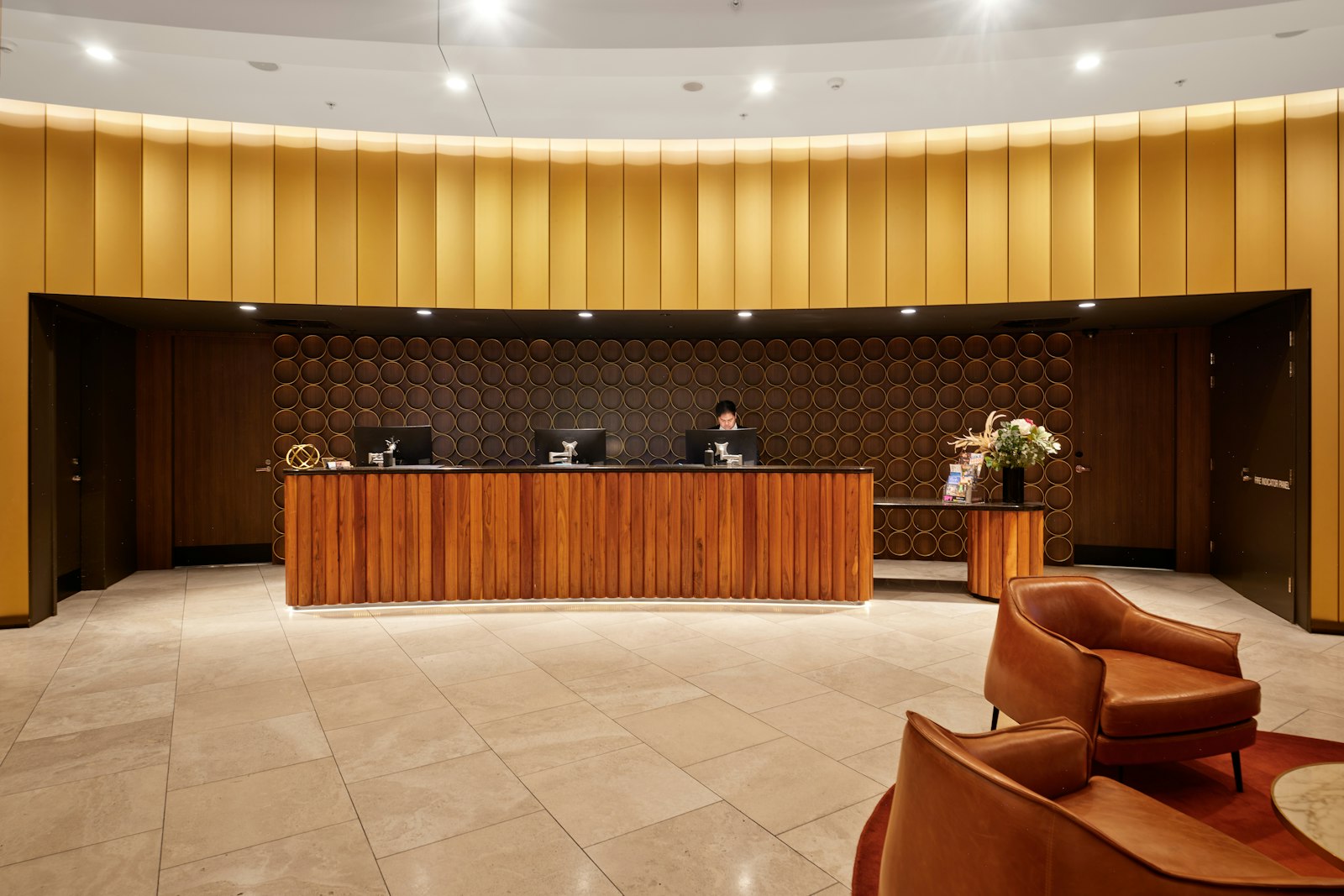
How This Applies Across Different Kinds of Properties
The legal position is identical for every kind of property, no law distinguishes a budget hotel from a five-star resort on this question, but how often the issue comes up, and how prepared front-desk staff need to be, does vary by the kind of property you run.
Why Some Properties Still Have Informal Policies
Given the settled legal position, it is fair to ask why “couple-friendly” or “local ID only” policies still exist at some properties at all. A few real reasons come up repeatedly:
- Local social pressure or past incidents. Some properties, particularly in smaller towns, have faced harassment from local groups or authorities over guests they assumed were unmarried, and adopted a restrictive policy to avoid repeat friction rather than because the law required it.
- A misplaced sense of liability. Some owners incorrectly believe they could be held responsible for guests’ personal conduct, when in fact a property’s legal exposure comes from failing to verify identity and register guests correctly, not from a guest’s marital status.
- Franchise or brand-level policy choices. Individual properties on OTA platforms have, at different times, been allowed to set their own local admission policies. In 2019, for example, one major budget hotel aggregator publicly changed its country-wide policy to let individual partner hotels opt out of accepting unmarried couples in certain markets, a business decision that was widely reported at the time. That is a commercial policy set by a company, not a requirement imposed by Indian law.
It is worth separating these two things clearly: a property is free, as a business, to set reasonable and lawfully-applied house rules (minimum age, ID verification, conduct standards, cancellation terms). What it cannot do is frame a blanket refusal of unmarried guests as a legal requirement, because no such requirement exists, and doing so can create exactly the discrimination exposure discussed next.
Common Objections From Property Owners, Answered
A few concerns come up repeatedly from property owners weighing whether to keep an informal marriage-proof requirement. It is worth addressing them directly rather than leaving them unspoken.
The Discrimination and Consumer-Complaint Risk of a Blanket Refusal
A property that turns away otherwise eligible, ID-verified adult guests solely because staff believe they are unmarried is on weaker legal footing than it may assume. The Consumer Protection Act, 2019 allows a guest to raise a complaint against a service provider for deficiency of service or unfair trade practice, and a refusal based on an assumption about marital status, rather than any genuine safety, capacity or conduct issue, is difficult for a property to justify if challenged. Some legal commentators have also argued that such refusals sit uneasily against the freedom-of-movement and equal-treatment principles discussed above, though this specific fact pattern has not been extensively tested in higher courts.
In practice, the more immediate risk for most properties is reputational rather than a courtroom outcome: a guest turned away without a clear, consistently-applied policy is a guest likely to leave a public review naming the property, and OTAs and booking platforms increasingly treat discriminatory refusal patterns as a listing-quality issue. A written, consistently-applied, ID-and-age-based policy protects a property from both the legal exposure and the reputational one, since it gives staff an objective standard to point to rather than a subjective, case-by-case judgement call.
What a Guest Can Do If Refused a Room
Guests occasionally land on this page after being turned away, so it is worth stating their options plainly, since a property benefits from staff who can answer this correctly rather than defensively. A guest refused a room purely over assumed marital status can ask the property for the refusal in writing, since most properties will not put an unlawful reason on paper and will instead either accommodate the booking or cite a genuine, unrelated ground. A guest can also raise the incident with the OTA or booking platform used to make the reservation, most of which treat this as a service-quality complaint against the property, and, where the guest believes the refusal was genuinely discriminatory, file a complaint through India’s consumer grievance channels. None of this requires a guest to prove or disclose their marital status at any stage; the property is the one that would need to justify the refusal, not the other way around.
Documenting and Following Up After an Incident
Knowing what to say in the moment, covered above, is only half of handling an incident well. What a property does in the hours and days afterward matters just as much, both for the affected guest and for the property’s own protection.
Keep a simple written record of any incident as soon as possible after it happens: the date and time, who was involved on both sides, what was said or demanded, and how staff responded. This record protects the property if the incident is later disputed or escalated, and it is far more reliable than relying on staff memory days or weeks later.
If a guest was made to feel unwelcome or unsafe, even briefly, a short, genuine acknowledgement from the property, rather than silence, tends to matter more to how the guest remembers the stay than any single gesture like a refund or upgrade. Offering to move the guest to a different room, waiving a fee, or simply checking in with them later in their stay are all reasonable responses depending on what actually happened.
Properties increasingly face this kind of incident becoming public on social media or review platforms, sometimes accurately, sometimes with details missing or distorted. Resist the urge to argue the details publicly in a review reply. A brief, factual response, confirming the property’s policy and that the matter is being looked into internally, protects the property’s position far better than an emotional or defensive one, and keeps the door open to resolving things directly with the guest instead of in public.
This Cuts Both Ways: Married Couples Face the Same Assumption Problem
It is worth noting that a policy built around assumed marital status does not even reliably achieve what it sets out to. Many married couples in India do not share a surname, do not carry a marriage certificate while travelling, and have no obligation to prove their marital status to a hotel any more than an unmarried couple does. A front-desk assumption based on appearance, surname mismatch or a moment’s hesitation at the counter is just as likely to embarrass a married couple as to correctly identify an unmarried one. This is, in practice, the strongest argument for the ID-and-age-only standard described on this page: it is the only version of the policy that is both legally correct and impossible to apply incorrectly, since it never depends on a staff member’s guess about a private fact that was never anyone’s business to ask about.
Writing a Lawful, Non-Discriminatory Check-In Policy
A short written policy, displayed at the front desk and used consistently by every staff member on every shift, is the single most effective step a property can take. A workable policy covers:
- The only two conditions for check-in: valid government photo ID from each adult guest, and confirmation that all guests are 18 or older.
- What staff will never ask for: proof of marriage, matching surnames, matching home addresses, or a stated relationship between guests.
- How ID is verified and recorded, applied identically regardless of the apparent relationship between guests, referencing your standard ID verification and guest register process.
- General conduct rules that apply to every guest equally (noise, visitors, property damage, safety), so any refusal of service is tied to an actual, documented conduct issue rather than an assumption made at check-in.
- A short staff script for handling any outside interference, drawn from the point above, so a single staff member is never left improvising a legal position under pressure.
Training Your Front Desk Team
A written policy only works if every shift actually applies it, so a short, recurring training habit matters more than the document itself. Three things are worth building into onboarding and periodic refreshers for front-desk and night-audit staff:
- Rehearse the exact wording staff will use if a guest asks why no marriage proof is required, or if an outside party questions a booking, so no one is improvising a legal position in the moment.
- Separate identity checks from character judgements. Staff are verifying a name, photo and date of birth against a document, not forming an opinion about who a guest is travelling with.
- Give staff a clear escalation path for anything beyond routine check-in, whether that is a genuine conduct issue or outside interference, so a single team member is never left to decide, alone, whether to comply with an unlawful demand.
Properties that treat this as a five-minute training topic rather than an unwritten, staff-dependent custom consistently report fewer awkward front-desk moments and a lower chance of a dispute becoming a public review.

What Front-Desk Staff Can Say
Having the right policy written down is only useful if staff can also express it naturally, in the moment, without sounding awkward or uncertain. A few ready scripts help.
Keep the tone matter-of-fact rather than defensive or apologetic in any of these situations, staff who sound uncertain tend to invite more questions, while a calm, consistent answer usually closes the conversation quickly.
How This Plays Out in Practice
Common Mistakes Properties Make
A Quick Checklist for Front-Desk Staff
- Confirm every guest is 18 or older before assigning a room.
- Collect and record one valid government photo ID per adult guest, exactly as you would for any booking.
- Never ask for proof of marriage, matching surnames, or a stated relationship between guests.
- Apply the same conduct rules and check-in process to every guest, regardless of assumed relationship status.
- If questioned by anyone claiming authority, ask for identification and the specific legal provision cited, and record the interaction in writing.
- Escalate genuine safety or conduct concerns using your standard house-rules process, never a marital-status assumption.
How OpenStays Fits Into This
OpenStays does not, and cannot, make the legal judgement call about who a property admits, that decision and its policy remain entirely yours. Where OpenStays does help is in making an ID-based, age-verified check-in process consistent and well-documented: guest ID capture and storage, register entries, and booking records all live in one place, which is exactly the objective, non-discretionary standard a lawful check-in policy depends on. A property using a consistent digital verification flow for every booking is, in practice, far less likely to end up in the kind of inconsistent, staff-by-staff judgement call that creates both legal and reputational risk.
If you are building out your check-in process end to end, our guides on Guest ID Compliance and Guest Register Format and Maintenance cover the operational side in detail.
Frequently Asked Questions
Is it illegal for an unmarried couple to share a hotel room in India?
No. There is no central or state law that makes this an offence. The Madras High Court has directly confirmed that unmarried adults occupying a hotel room together is not a criminal matter.
Can a hotel legally refuse a room to a guest because staff believe they are unmarried?
A property can set its own reasonable house rules, but a refusal based purely on assumed marital status, rather than any genuine ID, age or conduct issue, carries real discrimination and consumer-complaint exposure, and is difficult to justify if challenged.
What ID do unmarried guests need to check into a hotel in India?
The same as any other guest: one valid government-issued photo ID per adult (Voter ID, Driving Licence or Passport). No additional or different documentation is legally required based on relationship status.
Can police enter or raid a hotel room just because a couple is not married?
No. A private hotel room is not a public place, so the obscenity provisions sometimes cited in these incidents do not apply. Genuine police action requires an actual legal basis, not an assumption about a guest’s marital status.
Do some hotels still ask for proof of marriage?
Some do, as an informal, self-imposed policy rather than a legal requirement. It has no basis in Indian law, and properties that rely on it are applying a stricter standard than the law itself sets.
Is the legal position different in different Indian states?
The core legal position, no law bars unmarried adults from sharing a hotel room, is a matter of central criminal law and constitutional right, and does not vary by state. What can vary locally is enforcement culture and the frequency of informal moral-policing incidents, which is a practical, not a legal, difference.
Does this apply to homestays and guesthouses, not just hotels?
Yes. Nothing about the legal position is specific to hotels; it applies equally to homestays, guesthouses and resorts, since the underlying law concerns adult guests generally, not any one category of property.
Should our property have a written check-in policy on this?
Yes. A short, written, consistently-applied policy based only on age and ID, of the kind outlined on this page, is the most effective way to avoid both legal exposure and inconsistent front-desk judgement calls.
What should staff do if a local group or self-styled moral-policing organisation tries to intervene during check-in?
Stay calm and do not let anyone without demonstrated police authority direct staff to take action against a guest. Ask for identification and the specific legal basis for any demand, decline to share guest information or take action based on assertions alone, and call local police if the situation escalates or staff feel unsafe. A written incident record, covered in the section above, should follow immediately afterward.
Can a property lose its licence for refusing to serve unmarried couples?
A blanket refusal is more likely to create consumer-complaint and reputational exposure, covered earlier on this page, than a direct licensing consequence, since hotel and lodging licences are not typically conditioned on marital-status checks. That said, a pattern of documented discriminatory refusals could factor into a broader regulatory or consumer-forum complaint, which is one more reason a written, non-discriminatory policy is the safer path.
Does a booking platform’s own policy settings affect what a property can legally require at check-in?
No. A platform’s optional settings, filters or badges reflect that platform’s own commercial policies, not a legal requirement, and do not change what a property is actually permitted to ask for under Indian law. A property should base its check-in requirements on the legal position described on this page, not on what a booking platform’s interface happens to offer as a toggle.
Does it matter if the two guests’ ID addresses are in different cities or states?
No. Nothing in India’s hotel registration requirements ties guest eligibility to whether two guests share an address, a surname, or a home state. Address mismatches between guests are common for entirely unrelated reasons, and are not a basis for additional questioning or refusal.
Should a property mention its non-discriminatory check-in policy publicly, on its website or listing?
It can help, though it is optional. A brief line in your house rules or FAQ, stating plainly that check-in requires only valid ID for each adult guest, reassures guests who have previously faced awkward questions elsewhere, and gives your own staff a clear, public reference point to stand on if a situation ever arises. It does not need to be prominent, a single sentence in your existing policies section is enough.
In Summary
Indian law does not require, and has never required, proof of marriage for hotel check-in. The Madras High Court has said so directly, and the constitutional right to privacy recognised in the Puttaswamy judgment reinforces the same position. The only two conditions the law actually attaches to check-in are that guests be adults and that they produce valid identification, exactly as for any other booking. Properties that build their check-in policy around those two facts, consistently applied by every staff member, avoid both the discrimination exposure of a blanket refusal and the awkward, inconsistent judgement calls that come from having no written policy at all.
This guide reflects the publicly reported legal position, including the Madras High Court’s 2019 ruling and the Supreme Court’s Puttaswamy judgment, as of August 2026, and is intended as general information rather than legal advice on a specific situation. If your property is dealing with an active legal or law-enforcement matter, consult a lawyer directly.
This page reflects our understanding of the publicly reported legal position and general industry practice, not legal advice for your specific property or situation. Laws, court rulings and local enforcement practices can change, and their application can vary by state and circumstance. Please consult a qualified lawyer before relying on this information for an active legal matter, or before finalising your check-in policy.