
STRATEGIES / RESOURCE GUIDE
Why is my hotel not getting bookings?
A six-factor diagnostic covering visibility, response time, reviews, price, booking friction and calendar accuracy.
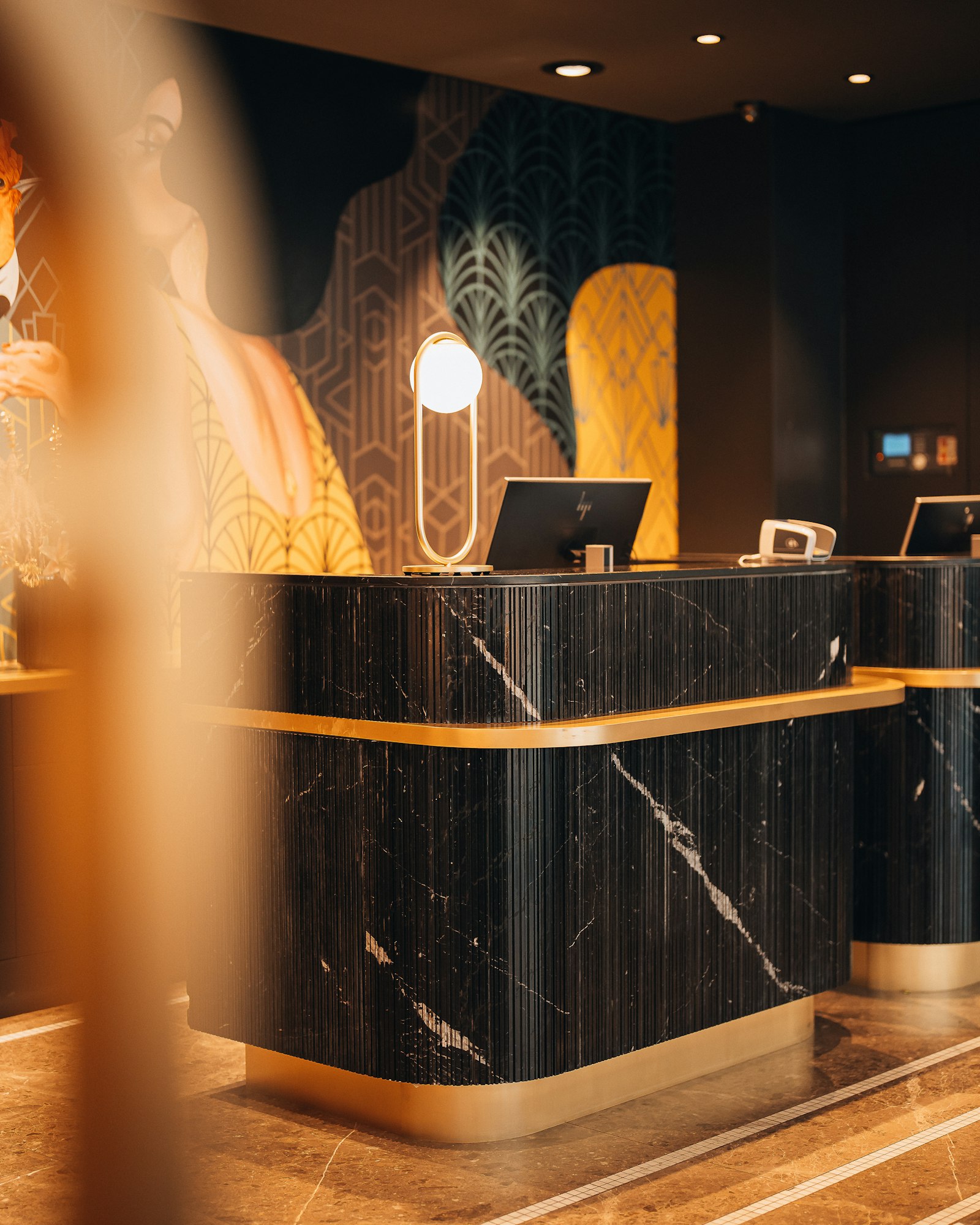
There is rarely one single reason a homestay, hotel or resort suddenly stops getting the bookings it used to get. Most owners check one thing, usually the room rate and stop there. But a property with a fair rate can still sit empty because guests never see the listing, or see it and do not trust it, or message on WhatsApp and wait four hours for a reply, or find the dates wrongly blocked on the calendar.
This page is built as a diagnostic, not a pep talk. It walks through the six factors that actually decide whether a browsing guest turns into a confirmed booking: whether you show up at all, how fast you respond once someone reaches out, whether your reviews and photos earn trust, whether your price is positioned correctly against what else is available, how much friction sits between a guest deciding to book and actually paying and whether your calendar is telling OTAs and guests the truth about what is available.
India-specific context matters here. Major OTA platforms operating in India list well over a lakh properties between them and the largest global booking platforms carry an India catalogue running into the tens of thousands of independent hotels and homestays. A listing that just exists, with a handful of photos and an average response time, gets buried under competitors who took the extra hour to fix each of the six factors below. None of the fixes below cost anything to implement, they just take a property owner actually working through them in order.
- Search your own property name plus your city or area on Google right now, from a phone and see exactly what shows up first. If a competitor or an OTA listing outranks your own name, that is worth fixing before anything else.
- Open your best-performing OTA listing and count the photos. Under 20 photos is a real gap, most well-ranked listings on major OTA platforms carry 30 or more covering every room type.
- Go through your last 5 guest messages on WhatsApp and your OTA inbox and note how long you took to reply to each one. Anything over an hour is losing you bookings to whichever competitor replied faster.
- Read your last 10 guest reviews and count how many have an owner reply attached, especially the negative ones.
- Compare tonight’s rate for your property against two nearby, similarly rated listings on the same OTA. A rate that is meaningfully higher with nothing to justify it will lose the comparison every time.
- Open your booking calendar or channel manager and check for dates that are closed out or blocked for no real reason, these look like unavailability to a guest even though the room is actually free.
If two or more of these turn up a real problem, that is very likely a meaningful part of why bookings feel slow right now. The sections below go through each one properly, with the actual fix.
The six reasons bookings dry up
Every one of these six factors is checkable and fixable without spending money on ads or a website redesign. Work through them in this order, visibility and response time tend to matter more than price for most independent properties, even though price is usually the first thing an owner blames.
1. Visibility: are you actually being seen?
A guest cannot book a property they never see. OTA search results and Google both work on ranking algorithms and a listing that is technically live but poorly optimised gets pushed down far enough that it stops mattering.
On major OTA platforms, published partner guidance points to several concrete ranking inputs: a review score below 7 out of 10 causes what these platforms themselves describe as meaningful ranking suppression, a score of 7 to 7.9 is competitive mainly for budget properties, 8 to 8.9 gives solid visibility and 9 and above signals strong algorithmic performance. Photo count matters too, with 20 photos treated as the minimum threshold for competitive display and 30 to 40 covering every room type performing better. Host-initiated cancellations are tracked separately and pull ranking down and properties priced well above comparable nearby listings get deprioritised regardless of how good the property actually is.
India’s major domestic OTAs run on a similar logic through their shared partner extranet. The platform tracks a content completeness score and listings should aim for 100 percent by filling in every amenity, policy and room detail field rather than leaving sections blank. The extranet also includes a competitor-comparison view that shows how your rate compares to similar nearby properties and separate visibility tags that put a listing in front of travellers searching with a specific budget or experience in mind.
| What to check | Weak listing | Strong listing |
|---|---|---|
| Photo count | Under 15, missing some room types | 30 to 40+, every room and common area shown |
| Review score | Below 7.0 out of 10 | 8.0 or higher |
| Content or profile completeness | Fields left blank | Every amenity, policy and room field filled in |
| Google Business Profile | Unclaimed or incomplete | Claimed, verified, photos and hours current |
Visibility outside the OTAs matters just as much. A Google Business Profile that is claimed, verified and kept current is what makes a property show up when someone searches its name or searches for stays in the area directly on Google or Google Maps, before an OTA listing even enters the picture. Google also offers free booking links through Google Hotel Ads, which show a property’s own rate directly in Google Travel search results at no cost, alongside the paid OTA listings, as long as the booking engine or a connectivity partner is feeding rates and availability to Google.
Setting up Google business profile and free booking links
- Search your property name on Google. If a profile already exists but says “claim this business”, claim it through Google Business Profile using an email address you control.
- Fill in every field, category, address, phone number, opening hours and a description, then upload at least 10 to 15 current photos, the same rule about honest, up to date photos applies here as it does on OTA listings.
- Turn on messaging or make sure your phone number and WhatsApp are clearly listed, since a guest finding you through Google will usually try to contact you the same way they would an OTA listing.
- To get free booking links showing your own rate in Google Travel search results, connect your booking engine or a connectivity partner to Google Hotel Center so it can feed accurate rates and availability, this part usually needs support from whichever booking engine or channel manager you use.
None of this costs anything beyond the time to set it up and unlike an OTA listing, a completed Google Business Profile sends guests straight to you rather than to a page that also lists every competitor nearby.
2. Response time: are you replying fast enough?
Guests comparing several properties message more than one of them at the same time. The property that replies first very often gets the booking, regardless of which one had the better room or the better rate.
Several major OTAs require hosts to answer at least 90 percent of messages within 24 hours just to stay in good standing, but that is only the minimum. Replying in under an hour, sustained over several months, improves search ranking and earns a visible fast-responder badge that guests see before they even message. Some platforms tie response speed directly to premium host status, with an average response time under 2 hours generally needed for a top ranking position and separately reward round-the-clock responsiveness including replies outside normal business hours. Other platforms display typical response time to guests directly on the listing and factor strong response metrics into their preferred-partner programs along with a ranking boost for properties offering immediate confirmation instead of request-and-wait bookings.

The business impact is larger than most owners expect. Listings that reply within 10 to 30 minutes commonly appear several positions higher in search results than slower competitors and enquiry-to-booking conversion drops sharply once response time crosses the one-hour mark. The practical difference between a 10-minute reply and a 2-hour reply can be the difference between a listing showing up on page 1 or page 5 of search results, which for most guests means it never gets seen at all.
3. Reviews and trust: would a stranger believe your listing?
A guest who has never stayed with you is relying entirely on reviews and photos to decide whether to trust you with an advance payment. A widely cited travel-industry study found that 77 percent of travellers say they are more likely to book a property when the owner or manager actually responds to reviews and that gap holds for negative reviews too, a calm and specific reply to a bad review often reassures a future guest more than another five-star review would.
This connects directly back to the visibility factor above, since review score is one of the clearest ranking inputs on every major OTA. But the trust effect works separately from ranking as well: two listings sitting next to each other in search results with similar scores will still convert differently if one has thoughtful owner replies and recent, honest photos and the other has neither.
- Reply to every review, not just the negative ones, a reply on a five-star review costs nothing and still shows up to future guests.
- When a review is unfair or factually wrong, reply politely with the specific facts rather than arguing, future guests read the reply more carefully than the original review.
- Replace photos that no longer match reality. A guest who arrives to a room that looks worse than the listing photos almost always says so in their own review, which then drags the score down further.
- Ask happy guests for a review before they check out, most guests who had a good stay simply forget to leave one unless asked directly.
4. Price positioning: are you priced to lose the comparison?
Price is usually the first thing an owner suspects when bookings slow down and it is a real factor, just not in the way most people assume. Rate competitiveness against similar nearby listings is a direct ranking input on major global OTAs and a visible comparison point on the domestic OTA extranet’s competitor view, so a rate that sits meaningfully above the comparable set loses both the algorithm and the guest doing manual comparison shopping.
The opposite mistake costs just as much. Dropping the rate aggressively to chase bookings trains repeat guests and price-sensitive travellers to simply wait for the next discount and it can trigger rate parity problems if the discount is not applied consistently across every channel including your own direct channel, which is a compliance and contract issue covered in detail on our Rate Parity Strategy page. Seasonal mispricing is a related and very common trap: a rate that made sense in the off season but was never updated for a festival weekend or wedding season leaves real revenue on the table, which our Seasonal Pricing for Hotels page walks through with worked numbers and getting the base per-room versus per-guest structure right in the first place is covered on the Per Room vs Per Person Pricing page.
The practical check is simple and worth repeating from the diagnostic above: pick two nearby, similarly rated properties and compare your rate for the same date. If yours is higher without an obvious reason a guest can see in the photos or amenities, that gap is actively costing bookings.
5. Booking friction: how hard have you made it to actually pay you?
Some guests decide to book and then simply give up partway through because the process asked for too much effort. This shows up in two very different places, a slow or clunky direct booking website and a WhatsApp or phone conversation that never actually gets to a confirmed, paid booking.
On the website side, load time alone is a measurable drop-off point. Industry mobile-web research commonly cited across the hotel sector shows that a majority of mobile visitors abandon a site that takes more than 3 seconds to load and every additional second of load time increases the chance a visitor leaves before ever reaching a booking form. A slow, image-heavy site with no visible price until three clicks in loses guests before they even see what you are offering.
On the conversation side, the friction is different but just as costly. A guest who messages on WhatsApp, gets a reply and is then asked to call a landline, wait for a callback, or fill a long form before payment is even mentioned will often lose interest and book something else instead. The fix is not a new website, it is removing steps: confirm availability, quote one clear price and offer a UPI ID, a payment link or a bank transfer detail in the same conversation so the guest can pay the moment they decide to book.
6. Availability and calendar accuracy: are you accidentally telling guests you are full?
This is the quietest of the six factors because it produces no complaint, no bad review and no obvious symptom, a date that is wrongly blocked simply never gets a booking enquiry in the first place and an owner has no easy way to notice a booking that never happened.
The most common causes are a channel manager that is not properly synced across every OTA plus the direct calendar, so a booking made on one channel does not immediately close the same date everywhere else and a minimum-stay restriction left over from a peak period that is still blocking shorter, legitimate bookings well after the peak has ended. Both create the same outcome from a guest’s side, the property looks unavailable when it is not.
- Open the calendar for the next 60 days and check every date marked unavailable actually has a booking against it.
- Check minimum-stay rules on each OTA separately, a 3-night minimum set for a festival weekend that was never removed will keep blocking single-night and two-night bookings indefinitely.
- If more than one OTA is used without a channel manager keeping them in sync, treat this as the most urgent fix on this entire page, an unsynced calendar risks both lost bookings and double bookings at the same time.
What this looks like in practice
Four realistic situations, each one where the property owner’s first guess about the cause was wrong.
How this plays out across different kinds of properties
The six factors apply to every property type, but which ones tend to bite hardest is different depending on what you run.
Common mistakes that make this worse
- Checking bookings only once a week. Response time and calendar errors compound daily, a problem caught on day one costs a handful of enquiries, the same problem caught after a week can cost dozens.
- Fixing only the OTA that currently performs best and ignoring the others. A calendar sync issue or a stale photo set usually affects every channel at once, not just one.
- Treating a slow month as purely seasonal without checking the six factors first. Genuine seasonal dips are real, but they are also the easiest excuse to reach for instead of doing the diagnostic.
- Responding to a negative review defensively or not at all. A defensive reply visible to every future guest usually does more damage than the original review.
- Running a discount to fix a visibility or response-time problem. A lower price does not fix a listing nobody sees or a message nobody answered quickly, it just reduces revenue on the few bookings that do come through.
- Assuming a booking engine or website alone will generate direct bookings. A booking engine processes a booking once a guest arrives ready to pay, it does not by itself bring the guest to the site or convince them to trust the property.
- Blaming the OTA algorithm itself instead of checking the fixable inputs feeding it, ranking algorithms respond directly to photo count, response time and review score, they are not arbitrary.
- Making all six fixes once and never checking again. A calendar restriction can reappear after a new event booking and a new competitor entering the area can shift the price comparison, this is a recurring check, not a one-time project.
The five numbers worth tracking every month
| Metric | What it tells you |
|---|---|
| Occupancy rate | The overall health check, but too broad on its own to point at a specific cause |
| Direct booking share | Whether guests can find and trust your own channel, not just the OTAs |
| Average review score | A leading indicator for OTA ranking on every major platform |
| Average response time | The single fastest factor to fix and the one most likely to move bookings within days |
| Enquiry-to-booking conversion | Whether the friction and trust factors are costing you guests who already found you |
Track these quarterly at minimum using the worksheet above and monthly if bookings currently feel unpredictable. A number that is moving in the wrong direction points straight back at one of the six factors above.
How OpenStays fits in
Several of the six factors above are exactly what OpenStays is built to remove as ongoing manual work rather than a one-time fix.
- The WhatsApp conversational AI answers guest enquiries the moment they arrive, at any hour, closing the single biggest response-time gap most independent properties have, without needing someone at a desk watching a phone all day.
- The direct booking engine charges 0 percent commission and is built for a fast, simple guest flow, quote, confirm, pay, rather than a heavy multi-page website that loses guests to load time or extra clicks.
- The Guest CRM keeps a record of past guests so a returning guest or a referral can be recognised and re-engaged directly, instead of every booking starting the trust-building process over from zero.
- Calendar and rate management syncs availability so a booking on one channel is reflected everywhere else immediately, closing the exact kind of quiet, invisible calendar gap described in the resort scenario above.
None of this replaces the work of writing better photos into a listing or replying warmly to a review, those are still on the property owner. What OpenStays removes is the manual, easy-to-forget parts, mainly response time and availability accuracy, that otherwise quietly cost bookings every single day.
Frequently asked questions
Why is my hotel not getting bookings even though my rate is competitive?
A fair rate only helps if guests actually see the listing, trust it enough to book and can complete the booking without friction. Check the other five factors on this page, visibility, response time, reviews, booking friction and calendar accuracy, before assuming price is the cause.
How many photos should my OTA listing have?
Treat 20 photos as the minimum for competitive display on most major OTAs and aim for 30 to 40 covering every room type plus common areas, the exterior and any standout amenity. Replace any photo that no longer matches what a guest will actually see on arrival.
Does response time on WhatsApp actually affect bookings?
Yes, even though WhatsApp itself has no built-in ranking penalty like an OTA inbox does. Guests comparing multiple properties tend to book whichever one replies first and a reply delayed by a few hours often means the guest has already booked somewhere else by the time you respond.
What review score do I need to rank well on OTAs?
A score below 7 out of 10 causes meaningful ranking suppression on most major OTAs. A score of 8 or higher gives solid visibility and 9 or above signals strong performance. Below 7, focus on service issues driving the score down before spending effort on anything else on this page.
Should I drop my price when bookings slow down?
Not as a first move. A lower price does not fix a listing nobody sees, a message that went unanswered for hours, or a calendar wrongly showing no availability. Run the diagnostic checklist on this page first, price is usually not the actual cause even when it feels like the obvious one.
How do I check if my calendar is wrongly blocking dates?
Open your booking calendar or channel manager for the next 60 days and check that every date marked unavailable actually has a real booking against it. Separately check minimum-stay rules on each OTA individually, a restriction set for a past peak period or event is a common leftover cause of dates that look booked but are not.
What is a Google Business Profile and do I need one?
It is a free listing that controls how your property appears on Google Search and Google Maps when someone searches your property name or searches for stays in your area. Claiming and fully completing it, with current photos, hours and contact details, is one of the few visibility fixes that costs nothing and works entirely outside the OTAs.
Are Google Hotel Ads and free booking links actually free?
Google Free Booking Links carry no advertising cost, they simply require your booking engine or a connectivity partner to feed accurate rates and availability to Google so your own price shows up in search results alongside OTA listings. Paid Google Hotel Ads campaigns are a separate, optional option on top of the free links.
How long does it take to see results after fixing these factors?
Response time improvements tend to show up fastest, often within days, since guests notice a faster reply immediately. Visibility changes like added photos or a completed content score typically take two to four weeks to fully surface in OTA search rankings, since most platforms update ranking signals on a delay rather than instantly.
Is a slow direct booking website really costing me bookings?
Yes, mobile page speed is a well documented drop-off point across the hotel industry, with a majority of mobile visitors abandoning a page that takes more than 3 seconds to load. If your own site is slow or buries the price and booking option behind several clicks, guests who reach it are leaving before they ever see what you are offering.
Does this apply to homestays and small guesthouses, or only larger hotels?
All six factors apply regardless of size. Visibility and response time in particular matter just as much, sometimes more, for a small homestay or guesthouse competing for attention against much larger listings on the same OTA search page.
My reviews are good and my response time is fast, so why are bookings still slow?
Check calendar and availability accuracy next, it is the factor most likely to be silently costing bookings without producing any visible symptom. A wrongly blocked date or a leftover minimum-stay restriction generates no complaint and no bad review, it simply prevents the enquiry from happening in the first place.
Should I focus on one OTA or spread effort across all of them?
Fix visibility, response time and calendar accuracy across every channel you use, not just your best-performing one. A calendar sync issue or an outdated photo set almost always affects every OTA at once and fixing only the top-performing channel leaves the same problem quietly suppressing the others.
What is the single fastest fix on this whole page?
Response time. It requires no new photos, no listing rebuild and no price change, just answering WhatsApp and OTA messages faster and the effect on conversion is usually visible within days rather than weeks.
Do OTA ranking algorithms actually change these thresholds over time?
Yes, exact thresholds and program terms shift periodically on every major OTA and changes to a listing typically take two to four weeks to fully show up in ranking. Treat the numbers on this page as a reliable general guide and always check your own OTA extranet or partner dashboard for the current terms specific to your account.
In summary
A property that is not getting bookings is almost never suffering from just one problem. Work through the six factors in order, visibility, response time, reviews and trust, price positioning, booking friction and calendar accuracy, using the 10-minute diagnostic and the printable worksheet above. Most of the fixes cost nothing beyond the time it takes to actually do them and the biggest wins for most independent properties come from response time and calendar accuracy, the two factors that are easiest to overlook because neither one produces an obvious complaint when it goes wrong.
This page offers general operational guidance based on publicly available OTA partner guidance and industry research, not a guarantee of specific booking outcomes for your property. OTA ranking algorithms, program terms and thresholds change over time and can vary by platform and market, always check your own OTA extranet dashboard and current partner terms for the most accurate, up to date guidance for your listing.